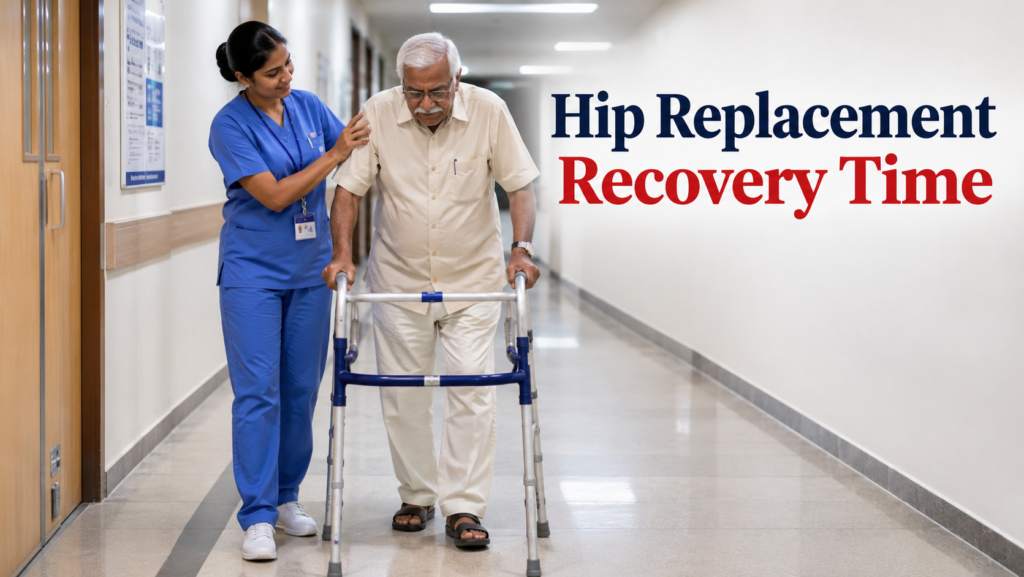
If you are planning hip replacement surgery, you probably want to know when you can walk without support, climb stairs, return to work or manage your daily activities again.
Hip replacement recovery time is usually 6 to 12 weeks for returning to many routine activities. However, your muscles and other tissues may continue healing and getting stronger for 6 to 12 months.
Recovery is not the same for everyone. Some patients walk comfortably within a few weeks, while others need more time.
In this guide, I’ll explain what to expect during each stage of hip replacement recovery, what can affect your progress and when you may safely return to everyday Indian activities.
How long does it take to fully recover from hip replacement?
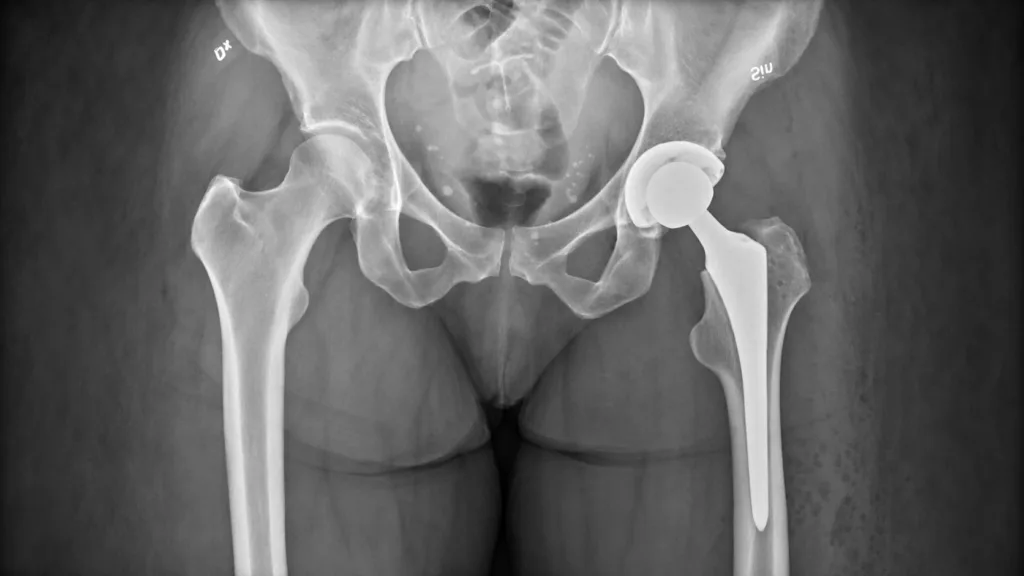
Most patients can manage many routine activities within 6–12 weeks after hip replacement, but recovery may continue for up to a year.
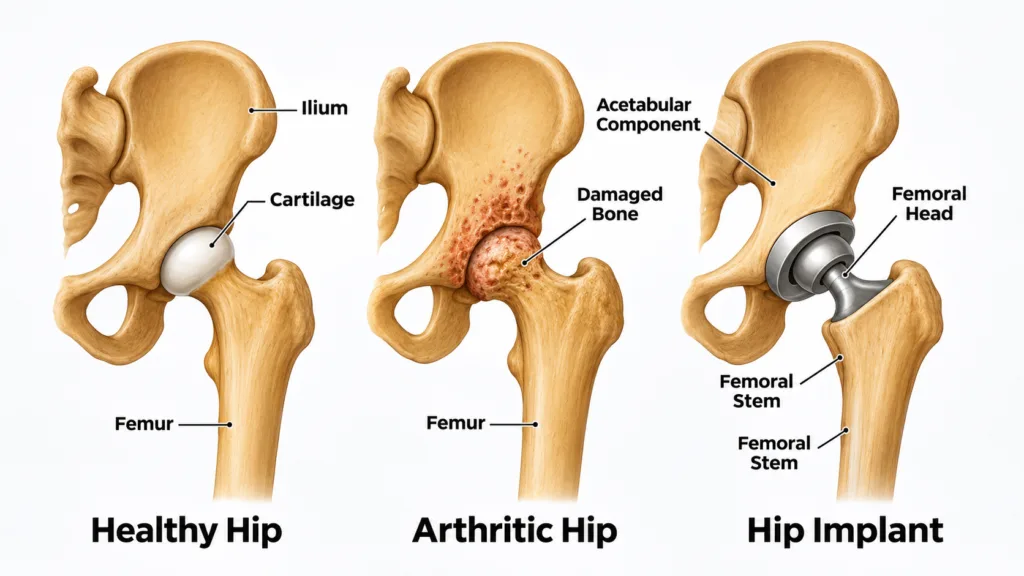
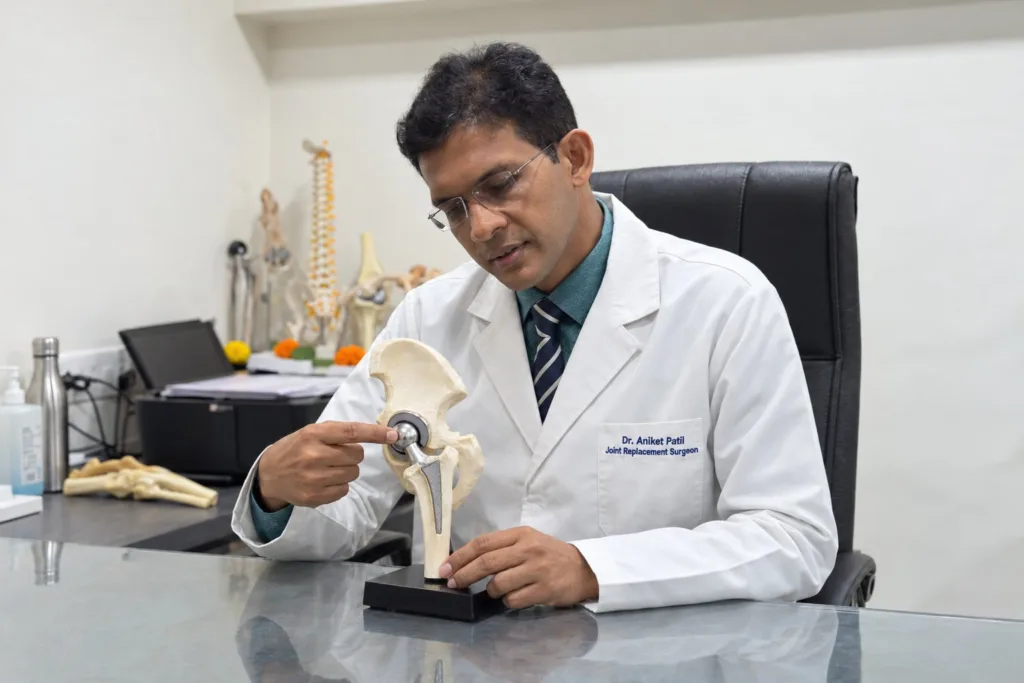
During a total hip replacement, the damaged ball and socket of your hip joint are replaced with artificial components. Your recovery involves healing the surrounding tissues and learning to move comfortably with the new joint.
How quickly you recover will depend on your health, muscle strength before surgery, the type of surgery and how well you progress with physiotherapy.
Hip replacement recovery time: Week-by-week timeline
You will usually start walking within a day of surgery and gradually become more independent over the next 6 to 12 weeks.
Here’s what hip replacement recovery typically looks like.
| Recovery period | What you can expect |
| Day 0–3 | Start walking with a walker and practise getting out of bed and climbing stairs |
| Week 1 | Take short walks, manage pain and swelling, and begin exercises |
| Week 2 | Walking becomes easier; some patients switch to a walking stick |
| Weeks 3–4 | Improve balance and walking distance; some return to desk work |
| Weeks 5–6 | Many patients walk with less support and resume light household work |
| Weeks 7–8 | Walk longer distances and progress to more strengthening exercises |
| Weeks 9–12 | Return to most everyday activities with greater comfort |
| Months 3–6 | Continue improving strength, flexibility and stamina |
| Months 6–12 | Further improvements in movement and muscle strength |
Remember, this is a general timeline. You may reach some milestones earlier or later.
Total hip replacement recovery week by week
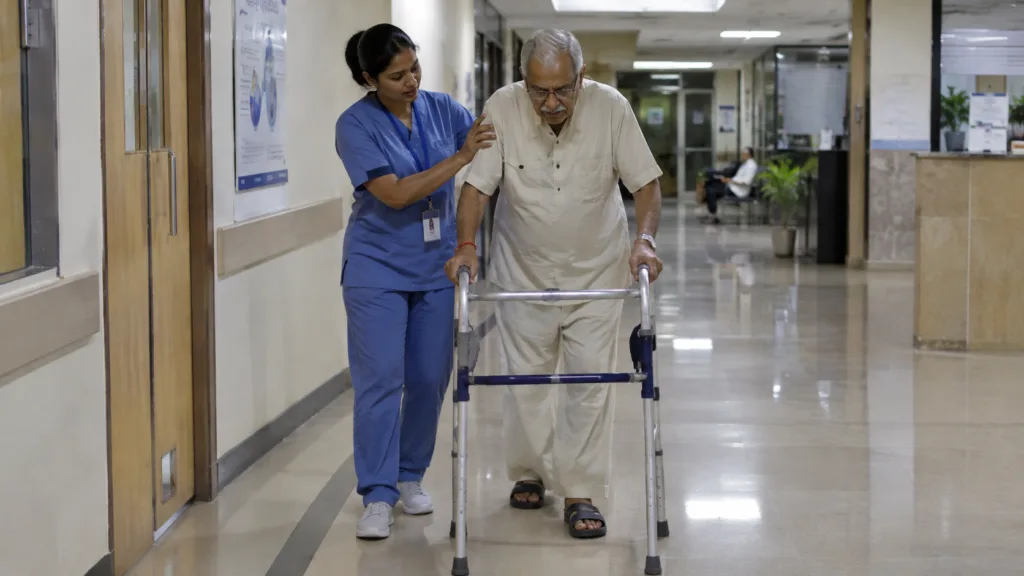
Days 0–3: Taking your first steps
You can usually start walking with a walker on the day of surgery or the following day.
Your physiotherapist will help you stand, take a few steps and get in and out of bed safely.
Before you go home, you’ll also learn how to sit on a chair, use the toilet and climb a few stairs if needed.
You can go home once your pain is under control and you’re able to move safely with the support available to you.
Week 1: Managing pain and swelling
During the first week, focus on short walks, prescribed exercises and keeping pain and swelling under control.
Swelling may increase around days 3 to 5. You might notice it around your thigh, knee or ankle.
Rather than trying to walk a long distance at once, take several short walks during the day. Rest between walks and use ice packs as advised.
Your walking distance should depend on your condition and how comfortable you feel. Follow your physiotherapist’s advice and increase your activity gradually.
You’ll probably need some help with bathing, dressing, cooking and other household activities.
Week 2: Walking with less support
By the second week, some patients can move from a walker to a walking stick as their balance and strength improve.
Getting out of bed, using the bathroom and walking around your home may start feeling easier.
You may also notice that you need less help with everyday tasks.
Keep using your walking aid until your physiotherapist says you’re ready to manage without it. There’s no need to rush.
Weeks 3: Improving walking and strength
By week 3, you may be able to walk longer distances, although some patients still need a walking stick.
You might notice some extra soreness after walking or exercising. This can happen as you start doing more.
If your muscles feel sore, reduce the activity and allow time for recovery. Don’t push through worsening pain.
Some patients can also return to desk-based work around this time, depending on their comfort and mobility.
Weeks 4–6: Returning to light activities
By 4 to 6 weeks, many patients can manage light household work, walk more comfortably and climb stairs with greater confidence.
You may be able to prepare meals, go for short outings and return to office work.
Some patients can stop using walking aids during this period. However, if you’re still limping or feel unsteady, continue using support.
Avoid lifting heavy objects or doing household work that involves repeated bending or squatting.
Weeks 7–8: Building endurance
Between 6 and 8 weeks, you can usually increase your walking distance and move on to more challenging exercises.
Your physiotherapist may introduce stationary cycling, balance exercises and exercises to strengthen your hip muscles.
You may also find it easier to spend more time on your feet.
However, don’t assume every movement is safe simply because you have less pain. Continue following your surgeon’s precautions.
Weeks 9–12: Returning to your routine
By around 3 months, many patients can manage most everyday activities without much difficulty.
Walking outdoors, climbing stairs and getting in and out of a car may feel considerably easier.
You may also be ready for activities such as swimming or cycling, once your surgeon approves.
Keep up your strengthening exercises, even if you’re feeling well.
Months 3–12: Continuing your recovery
Your hip muscles can continue getting stronger for 6 to 12 months after surgery.
You may still notice some stiffness or swelling after a particularly active day, especially during the earlier months.
Continue exercising regularly and increase your activities gradually.
Dos and don’ts to protect your new hip
The most important precautions are to avoid falls and movements that could put your new hip at risk of dislocation.
Your surgeon will explain which movements you need to avoid. These precautions can differ depending on how your surgery was performed.
What should you do after hip replacement?
Use supportive chairs, walking aids and prescribed exercises to make everyday movements safer.
- Sit on a firm chair with armrests, preferably one that isn’t too low.
- Use your walker or walking stick until you can walk safely without it.
- Keep frequently used items within easy reach so you don’t have to bend down.
- Apply wrapped ice packs as advised to reduce swelling.
- Continue your physiotherapy exercises regularly.
- Remove loose rugs and other things you could trip over.
- Take your prescribed medicines as instructed.
What should you avoid after hip replacement?
Avoid deep bending, twisting and crossing your legs if your surgeon has advised these precautions.
After certain surgical approaches, particularly posterior hip replacement, you may be asked to avoid:
- Bending your hip more than 90 degrees.
- Crossing your legs at the knees.
- Turning your operated leg too far inward.
- Bending forward to pick things up from the floor.
- Sitting on very low sofas or stools.
- Twisting your body while keeping your feet planted.
These restrictions are often temporary. Your surgeon will tell you when you can safely return to these movements.
When can you resume daily Indian activities after hip replacement?
You can usually return to light daily activities within a few weeks, but sitting on the floor, squatting and heavy household work need extra care.
Can you use an Indian-style toilet?
You should avoid Indian-style squat toilets during early recovery because deep squatting can increase the risk of hip dislocation.
Use a Western-style toilet or a raised commode instead.
Don’t try squatting again until your surgeon confirms it’s safe. Some patients may need to avoid squat toilets even after recovery.
Can you sit cross-legged or on the floor?
Avoid sitting cross-legged or on the floor during early recovery until your surgeon says these positions are safe.
Sitting on the floor for meals, prayer or meditation involves bending and rotating your hip quite a lot.
Whether you can return to these positions later depends on your hip movement, joint stability and the type of surgery.
When can you climb stairs?
Most patients can start practising stairs before leaving the hospital, with help from a physiotherapist.
At first, use a handrail. When going upstairs, step up with your non-operated leg first. When coming down, lead with your operated leg, using your walking aid as instructed.
As your strength improves, climbing stairs should become easier.
When can you resume household work?
You can often start light household tasks within a few weeks, but jobs involving heavy lifting, bending or squatting should wait.
Preparing simple meals or folding clothes may be manageable early in recovery.
Avoid mopping floors while bent over, lifting heavy water buckets, washing clothes while squatting or moving heavy furniture.
Use long-handled cleaning tools and ask someone to help with heavier work.
When can you perform pooja or yoga after a hip replacement?
You can usually perform pooja while sitting on a suitable chair, but avoid floor-based positions until your surgeon approves.
You should also avoid yoga poses that involve deep squatting, bending or twisting your hip.
Some poses may need to be modified even after you’ve recovered.
When can you drive, work and travel after hip replacement?
Some patients return to driving and office work within a few weeks, while long journeys and physically demanding jobs may need more time.
For driving, you need to be able to operate the pedals and brake quickly without pain or difficulty. You should also be off medicines that affect your alertness. Get your surgeon’s approval before driving again.
You may be able to return to desk work within 2 to 3 weeks. If your job involves standing for long hours, climbing or lifting, you’ll likely need more time.
Before planning a long car, train or flight journey, speak to your surgeon. Sitting still for long periods can increase the risk of blood clots after surgery.
What factors affect hip replacement recovery time?
Your health, muscle strength, type of surgery and rehabilitation all affect how quickly you recover.
If you were already finding it difficult to walk before surgery, rebuilding your strength may take longer.
Conditions such as diabetes or complications after surgery can also slow recovery.
Hip ball replacement recovery time may be different from total hip replacement recovery. In a partial hip replacement, only the ball is replaced. In a total hip replacement, both the ball and socket are replaced.
Your overall condition and the reason for surgery play an important role in recovery.
When should you contact your surgeon?
Contact your surgeon if your pain is getting worse, you develop a fever, or you notice unusual swelling, redness or discharge from the wound.
New pain or swelling in your calf also needs prompt medical attention.
If you suddenly have severe hip pain and cannot stand, you may have a dislocation.
Chest pain or sudden difficulty breathing needs emergency medical care.
Frequently asked questions
How long does it take to walk normally after hip replacement?
Some patients can walk without support within 2 to 4 weeks, while others may need 6 weeks or longer. It depends on your strength, balance and mobility before surgery.
How long does hip replacement pain last?
Pain usually improves over the first few weeks, although some discomfort and swelling may continue for several months. If your pain is getting worse instead of better, contact your surgeon.
How long should I continue physiotherapy?
Your rehabilitation programme should continue until you achieve your recommended strength and mobility goals. The AAOS advises continuing prescribed exercises for at least two months, although individual programmes vary.
Final thoughts
Hip replacement recovery time varies, but many patients regain much of their daily independence within 6 to 12 weeks. Full recovery can take longer.
I recommend taking your recovery one stage at a time. Keep up with your exercises, follow the precautions given to you and increase your activities as your strength improves.
If you’re planning hip replacement or have questions about your recovery, you can consult a hip replacement surgeon in Pune to understand what to expect based on your condition.