Recovery after knee surgery
Knee replacement recovery
Recovery is gradual. Walking usually starts soon after surgery, while movement, strength and confidence build over the weeks and months that follow.
The exact pace varies from person to person. Your recovery depends on the type of knee replacement, your health and mobility before surgery, how the knee responds after the operation and the rehabilitation plan you are given.
Think in milestones, not deadlines
Recovery does not happen on exactly the same schedule for everyone. A useful timeline shows what commonly happens at each stage, but your surgeon and physiotherapist should guide when you progress walking, exercises, driving, work and other activities.
A practical knee replacement recovery timeline
-
First few days
Early focus
Recovery starts soon after surgery. Pain and swelling are managed, and the hospital team usually helps you stand and begin walking with support.
Physiotherapy starts early. Before discharge, the priority is being able to move safely, use the recommended walking aid and manage the basic activities needed at home.
Walking safely · Pain and swelling · Starting exercises · Discharge planning
-
First 2 weeks
Early focus
At home, short walks, the exercises you have been given and regular rest become the main rhythm of recovery. Swelling, stiffness and tiredness are common during this early stage.
Follow the wound-care, medication and walking-aid instructions given by your surgical team rather than comparing your progress with someone else’s recovery.
Wound care · Swelling · Walking with support · Movement
-
Weeks 2–6
Building independence
Walking distance and confidence usually increase gradually. Strength and knee movement continue to improve, and some people begin using less support as it becomes safe to do so.
Daily activities often become easier during this period, but progress is rarely perfectly linear. A more active day may still be followed by extra swelling or fatigue.
Walking · Knee movement · Strength · Everyday tasks
-
Weeks 6–12
Returning to routine
Many people are able to return to more of their normal routine during this stage. Work, driving and longer periods of activity depend on your progress, the demands involved and whether your surgeon considers them safe.
Rehabilitation continues even when the knee is already functioning much better than it did in the first few weeks.
Work · Driving · Longer walks · Continued rehabilitation
-
Months 3–12
Longer-term recovery
Strength, endurance and confidence can continue improving for many months after knee replacement. Some swelling, stiffness or awareness of the operated knee may also take time to settle.
The aim is not to reach an arbitrary date. It is to recover useful movement and function safely and steadily.
Strength · Endurance · Confidence · Everyday function
Recovery is more than waiting for the wound to heal
-
Pain and swelling
Pain usually changes as the knee heals, while swelling can continue for weeks or sometimes longer. The important question is whether symptoms are gradually settling rather than whether they have disappeared by a particular date.
-
Walking
Walking starts with the support recommended by the care team. Distance and independence are increased gradually as strength, balance and confidence improve.
-
Movement and strength
Rehabilitation works on both knee movement and the muscles needed to support the joint. Progress may continue long after the first few weeks.
-
Energy and sleep
Major surgery can leave you tired, and sleep may be disrupted early in recovery. Energy usually returns progressively as activity, pain and routine improve.
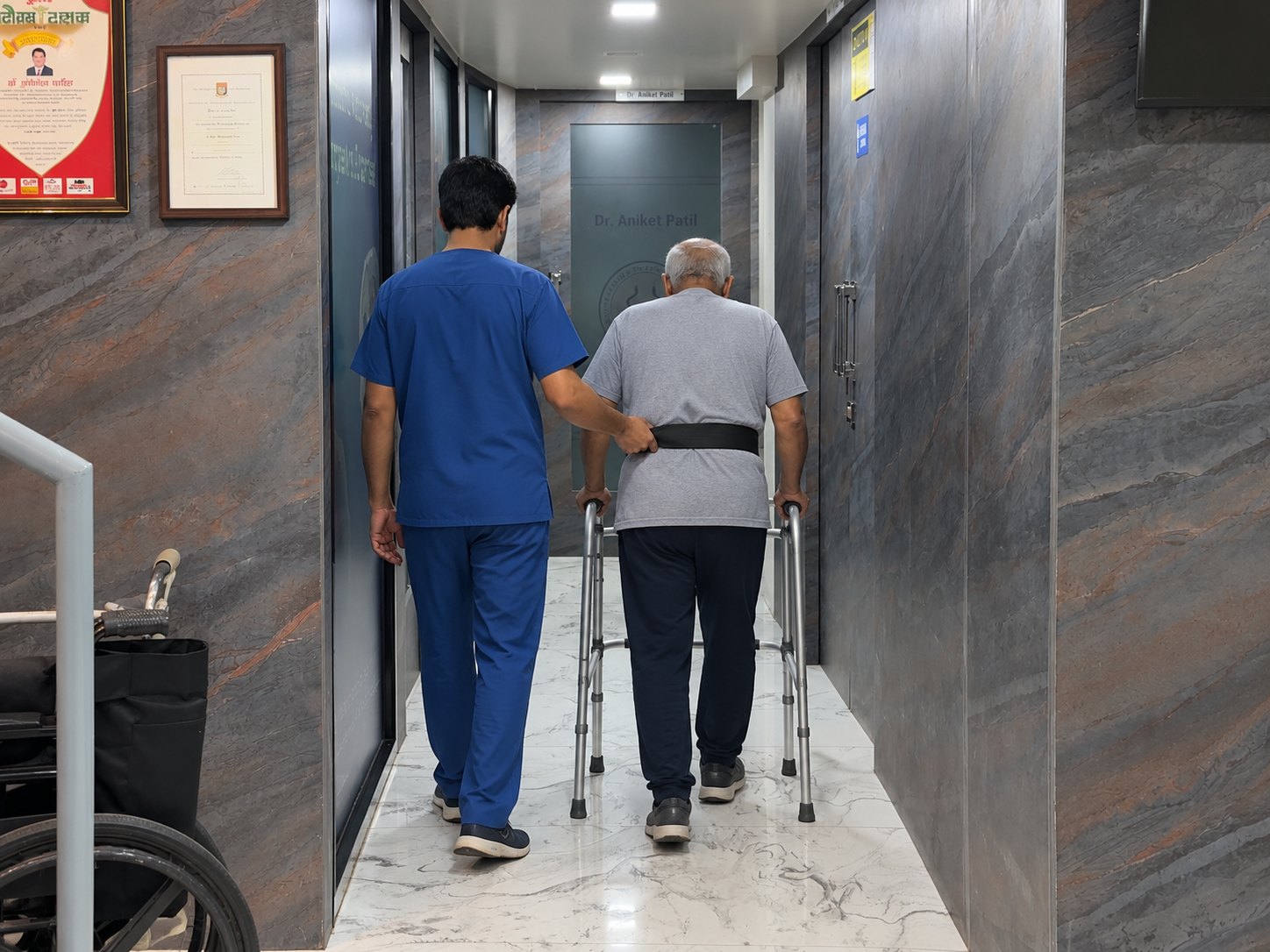
Physiotherapy is part of the recovery
Exercises and rehabilitation are used to restore movement, rebuild strength, improve walking and help you return to everyday activities.
The programme should progress with your recovery. Do the exercises and activity level recommended for you rather than copying another patient’s programme or trying to force the knee to meet a particular milestone.
The goal is steady, useful progress, not winning a race against the calendar.
When can I get back to normal activities?
-
Stairs
You will usually practise stairs as part of early rehabilitation if you need to use them at home. How naturally you manage stairs improves as strength, balance and knee movement return.
-
Driving
Driving usually resumes only after you can control the car safely, perform an emergency stop without hesitation and are no longer taking medicines that impair driving. Your surgeon should clear you before you restart.
Many knee-replacement patients return to driving within several weeks, but the timing varies with the operated leg, recovery and individual circumstances.
-
Work
Return to work depends heavily on the job. Desk-based work may be possible earlier, while work involving prolonged standing, lifting, travel or physical labour usually needs more recovery time.
-
Travel
Long journeys and flights need planning after surgery because prolonged sitting can increase blood-clot risk. Ask your surgical team when longer-distance travel is appropriate for you.
Not every knee replacement has the same recovery
-
Partial knee replacement
Recovery may be quicker for some patients because less of the knee is replaced, but progress still depends on the individual operation and patient.
Explore partial knee replacement -
Bilateral knee replacement
Recovering from surgery on both knees can be more demanding because both sides need to regain strength and mobility at the same time.
Explore bilateral knee replacement -
Revision knee replacement
Revision surgery can involve more complex reconstruction than a first knee replacement, so recovery needs to be planned around the individual revision operation.
Explore revision knee replacement
Know when to ask for help
Some pain, swelling and stiffness are expected after knee replacement. A sudden change or symptoms that are getting worse rather than better deserve attention.
Contact your surgical or medical team urgently if you develop:
- increasing redness, heat, swelling or drainage around the wound;
- fever, chills or feeling significantly unwell;
- new or worsening calf pain or swelling;
- pain or swelling that suddenly becomes much worse.
Seek emergency medical care for:
- chest pain;
- new difficulty breathing or sudden shortness of breath.
Your discharge instructions and surgical team should remain the first reference for concerns during your recovery.
Recovery questions
Questions about knee replacement recovery?
Dr. Aniket Patil can explain what recovery is likely to involve for your operation, or review how your recovery is progressing. Bring any reports or discharge notes you already have.
- Clinic
-
Om Hip & Knee Specialty ClinicUnit No. 202, Second Floor, Velstand
Opposite Reliance Mart, Rakshak Nagar
Kharadi, Pune 411014 Get directions - Hours
- Monday to Saturday
5:00 PM to 10:00 PMBy appointment