Knee replacement recovery time for elderly patients usually takes 3–6 weeks for basic daily activities, around 3 months for large improvement in mobility and 6–12 months to regain strength and movement.
But does recovery take longer at 75 than at 70? And is knee replacement still a good option for someone who is 80 years old?
As an orthopaedic surgeon, I believe these questions deserve more than a general recovery estimate.
When I see an elderly patient for knee replacement surgery, I don’t just look at their age. I also check how well they can walk, their muscle strength, other health conditions and the help they have at home.
Let’s look at what changes as patients get older and what families should realistically expect.
Knee replacement recovery time: Week-by-week timeline
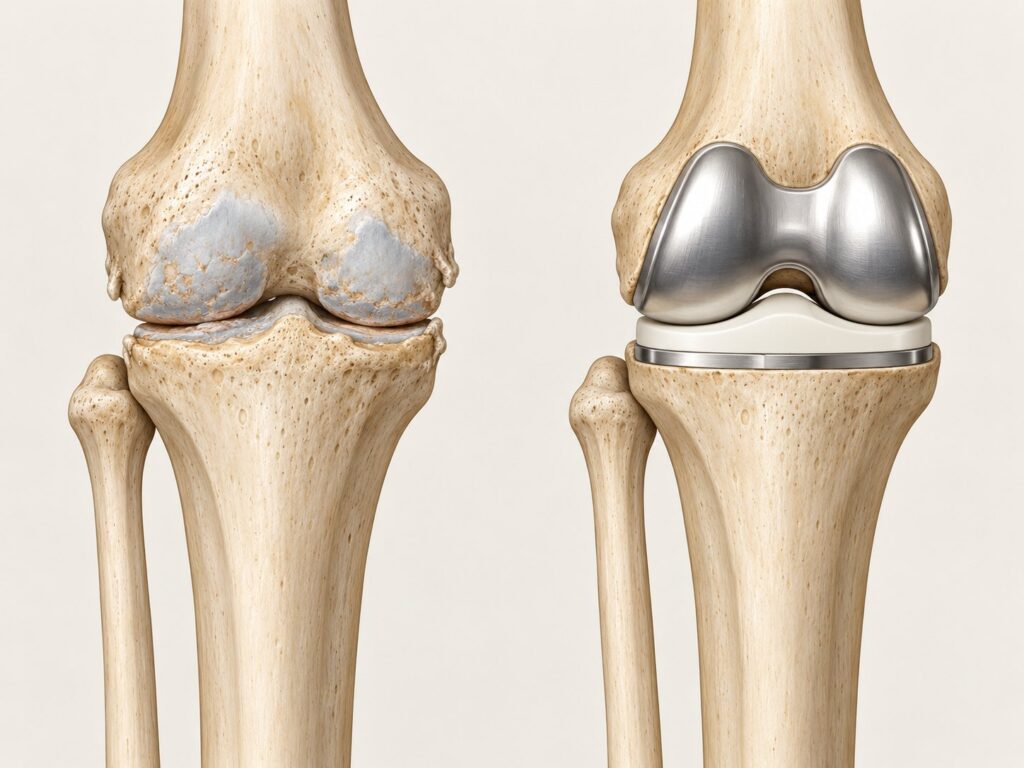
This timeline shows what elderly patients can expect after their first total knee replacement surgery. Recovery can be faster or slower depending on individual health and rehabilitation progress.
| Recovery period | What elderly patients can generally expect |
| First 24–48 hours | Most patients start walking with a walker and physiotherapist’s support. They also practise getting out of bed, standing from a chair and using the toilet. |
| Days 3–7 | Short walks with a walker or crutches. Many patients can eat, dress and use the toilet with some assistance. Stair climbing may begin with supervision. |
| Weeks 2–3 | Walking distance improves. Some patients can switch from a walker to a cane. Dressing, toilet use and bathing become easier. Showering depends on wound healing and the surgeon’s instructions. |
| Weeks 4–6 | Many patients can dress, prepare simple meals and take short outdoor walks independently. Some can walk without support. Driving may be possible after 4–6 weeks if medically cleared. |
| Weeks 6–12 | Longer walks, light household work, shopping and social outings become easier. Patients can gradually resume low-impact activities like stationary cycling. |
| Months 3–6 | Most daily activities become more comfortable. Walking longer distances, climbing stairs, swimming and cycling may be possible. Strength and balance continue improving. |
| Months 6–12 | Knee strength, stamina and movement continue improving. Swelling and stiffness gradually reduce. Some patients may take longer than a year to recover fully. |
Please note, patients aged 70, 75 or 80 may recover at different speeds depending on their health, muscle strength and mobility before surgery.
I always tell my patients that recovery has its ups and downs. Some days, your knee may feel more swollen or stiff, especially after walking or doing more activities than usual.
A little extra pain or swelling does not always mean something is wrong. But if the pain gets worse, swelling increases a lot, or you have a fever or fluid coming from the wound, please contact your doctor.
Knee replacement at age 70: What can patients expect?
At 70 years of age, many patients are still physically active. Some regularly walk, travel, climb stairs, and manage their daily activities independently.
For such patients, recovery after knee replacement can be relatively straightforward, provided they have reasonable muscle strength and their medical conditions are well controlled.
During the first few weeks, I generally focus on three things:
- Restoring knee movement, particularly the ability to straighten the knee.
- Improving quadriceps strength so the patient can stand and walk comfortably.
- Gradually reducing dependence on walking aids when balance and strength permit.
Many patients can resume basic daily activities within 3–6 weeks. However, rebuilding strength and walking endurance takes longer.
The good news is that knee replacement can also give lasting results at this age. A 2015 study published in The Archives of Bone and Joint Surgery found that 97% of knee implants in patients over 70 were still in place after about 12 years. Pain relief and knee function were also like those in younger patients.
However, I also look at how active a patient was before surgery. An active 70-year-old may recover faster than someone of the same age who has had trouble walking for many years.
My take: Being 70 does not always mean a slow recovery. Your muscle strength, health and ability to walk before surgery can matter more than your age.
Knee replacement at age 75: Does recovery become slower?
Recovery after knee replacement may be slower after the age of 75, particularly when patients have reduced muscle strength, poor balance or other medical conditions.
However, this doesn’t mean that patients over 75 cannot achieve good results.
A 2016 study of 278 knee replacement patients found that patients aged 75 and above had similar gains in knee movement as younger patients. However, they were less active and had more trouble with daily tasks.
This is why, during the first 6 weeks, I check how well my patients can walk, keep their balance and do daily tasks.
For example, a patient may be able to walk with a walker but still find it hard to get up from a low chair, climb stairs or use the toilet without help.
In such cases, I may ask them to keep using a walker and continue physiotherapy until they can walk safely without support.
I also ask families to make their homes safer before surgery. They can remove loose rugs, add grab bars in the bathroom and arrange help for the first few weeks.
My take: At 75, the goal is not to recover as quickly as possible. It is to regain independence safely while minimizing complications and falls.
Knee replacement at age 80: Is recovery still possible?
People aged 80 and above can recover well after knee replacement surgery. But they may need more time and support than younger patients.
A 2026 systematic review involving more than 447,000 patients found that people aged 80 and above could achieve functional improvements comparable to younger patients.
However, older patients had higher risks of certain systemic complications, including cardiac complications. They also tended to stay longer in hospital.
This is why I check more than just the knee X-ray before suggesting surgery at 80.
Before considering surgery in an 80-year-old, I assess:
- Overall medical fitness and cardiovascular health.
- Frailty, muscle strength, and balance.
- Walking ability before surgery.
- Cognitive function and ability to participate in rehabilitation.
- Availability of family or caregiver support.
Many patients aged 80 and above can start walking with a walker within a day after surgery, if they are well enough.
Others may need a longer hospital stay, rehabilitation support, or more help at home.
My take: Being 80 does not mean you are too old for knee replacement. What matters most is your health, the risks of surgery and how much it can help you walk and live better.
Knee operation recovery time: What actually changes with age?
As you get older, weaker muscles, poor balance and other health problems can make recovery after knee replacement slower.
But age alone does not decide how fast you will recover. Here are five things I look at before surgery.
1. Muscle strength before surgery
Patients with weak thigh muscles may take longer to walk without support. Stronger muscles can help patients stand, walk and climb stairs more easily after surgery.
2. Frailty
Frailty means the body is weaker and has a harder time dealing with stress, such as surgery.
A 2023 study of 811 knee replacement patients found that patients with higher frailty scores had more problems after surgery and poorer knee function during recovery.
3. Existing medical conditions
Poorly controlled diabetes, significant heart disease, anaemia, and other health conditions can complicate postoperative recovery.
4. Mobility before surgery
A patient who has used a walker for several years may need more time and help after surgery than someone who could walk without support.
5. Rehabilitation and family support
Regular physiotherapy helps patients build strength and improve knee movement. A safe home and help from family members can also make daily tasks easier during recovery.
This is why I always ask my patients to prepare for surgery, not just plan for recovery afterwards.
Knee replacement aftercare: What should elderly patients and families do?
Good knee replacement aftercare for elderly patients means walking with support, doing daily exercises, taking medicines on time and making the home safe to prevent falls.
Here are the precautions I generally emphasize.
Start walking with appropriate assistance. Early mobilisation helps restore function and reduces complications associated with prolonged bed rest. However, the patient should follow the surgeon’s weight-bearing and mobility instructions.
Continue prescribed physiotherapy. Exercises help improve knee movement, muscle strength, and walking ability. The programme should be adjusted according to pain, swelling, and progress.
Prevent falls at home. Remove loose rugs, keep bathrooms well-lit and add grab bars where needed. Use a walker or cane until you can walk safely without help.
Follow medication instructions. Pain medication and prescribed blood-clot prevention treatment should be taken exactly as directed.
Watch for warning signs. Increasing wound redness, discharge, fever, or new calf swelling requires prompt medical attention. Sudden breathlessness or chest pain requires emergency care.
Knee replacement age: Is there an upper age limit?
No, there is no fixed upper knee replacement age. Even patients in their 80s and 90s may be able to have surgery if they are healthy enough.
I would not recommend surgery for every 80-year-old, just as I would not automatically recommend it for every 60-year-old.
Instead, I look at three things:
- Is knee pain making it hard to walk, climb stairs or do daily tasks?
- Have medicines, physiotherapy and other treatments failed to give enough relief?
- Is the patient healthy enough for surgery, and are the benefits greater than the risks?
An 80-year-old who is fit and active may be a better fit for surgery than a 60-year-old with serious health problems.
The decision should always be individualized.
Fun fact: The oldest person to undergo Knee Replacement was 101 years old!
Frequently asked questions
How long does knee replacement recovery take for a 70-year-old?
Most healthy 70-year-olds can return to basic daily tasks within 3–6 weeks. Walking and knee movement often improve a lot within 3 months. Full recovery may take 6–12 months or longer.
Can an 80-year-old walk after knee replacement surgery?
Yes. Many appropriately selected 80-year-old patients begin assisted walking within hours after surgery. The time required to walk independently depends on their medical fitness, balance, muscle strength and rehabilitation progress.
Is knee replacement recovery more difficult after 75?
Not always. Patients over 75 with weak muscles, poor balance or other health problems may take longer to recover. But a healthy, active 75-year-old may recover faster than a younger patient with poor health.
My final advice
If you or your parents are thinking about knee replacement at 70, 75 or 80, don’t make the decision based on age alone.
What matters more is how much knee pain affects daily life, overall health and how well the patient can recover after surgery.
As an orthopaedic surgeon, my goal is not just to perform surgery. I want to help my patients make the right choice and get back to walking and doing daily tasks with less pain.
If you’re considering surgery for yourself or an elderly family member, you can consult me for knee replacement surgery in Pune to discuss your options and understand what recovery may look like in your particular case.
Dr. Aniket Patil
Orthopaedic Surgeon | Robotic Hip & Knee Replacement Specialist
Considering Knee Replacement for Yourself or a Family Member?
If you or your loved one is considering knee replacement surgery at 70, 75 or 80, I can help you understand the available treatment options, potential risks and what to realistically expect during recovery.
You can book a consultation with me, a knee replacement surgeon in Pune, for a personalised assessment and guidance on the next steps.