Hip arthritis
Hip arthritis: symptoms, diagnosis and treatment
Dr. Aniket Patil assesses your symptoms, hip movement and weight-bearing X-rays together to determine the pattern and severity of hip arthritis and which treatment fits the joint.
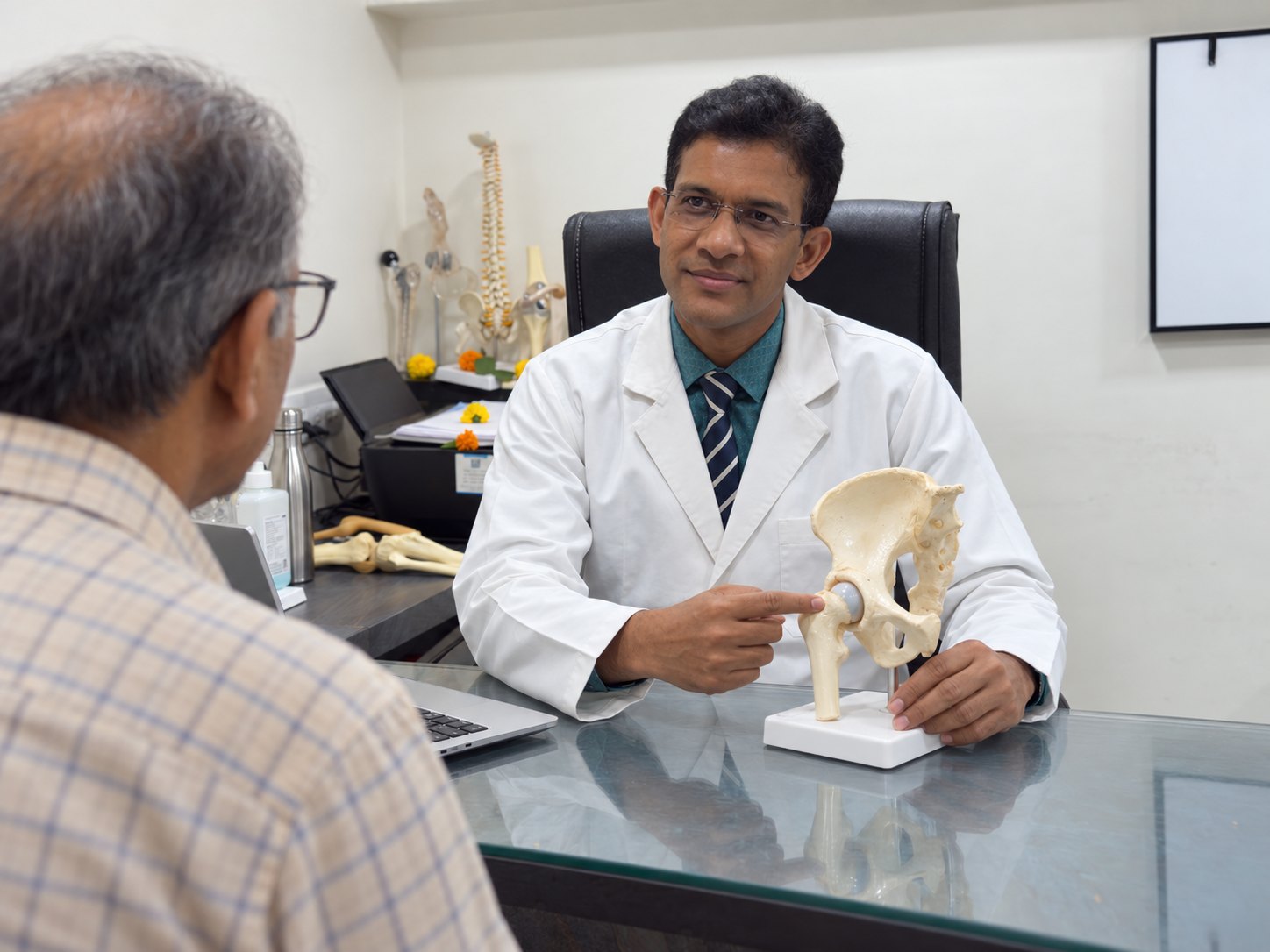
Dr. Aniket Patil · Knee & hip replacement surgeon · Kharadi, Pune
- 20+ years
- Clinical & surgical experience
- 3,000+
- Joint replacement surgeries
- Germany · Hong Kong
- Fellowship training
Medically reviewed by Dr. Aniket Patil, MS Orthopaedics
Overview
What is hip arthritis?
Hip arthritis usually means hip osteoarthritis: gradual damage to the cartilage and other structures inside the joint.
The hip is a ball-and-socket joint. The femoral head forms the ball, and the acetabulum in the pelvis forms the socket. Smooth cartilage covers both surfaces so the hip can move with very little friction.
As arthritis progresses, cartilage becomes thinner and rougher. The space between the joint surfaces narrows, and the bone around the damaged area can change shape. These changes can make the hip painful, stiff and harder to move.
Hip arthritis does not affect everyone in the same way. Treatment depends on how much pain and loss of function the joint causes, what the examination shows and how the changes appear on imaging.
Hip arthritis can be advanced on an X-ray without causing the same level of symptoms in every person. Dr. Aniket Patil matches the imaging with the clinical findings before recommending treatment.
Common hip arthritis symptoms
Hip arthritis often causes pain deep in the groin, but symptoms can also spread into the thigh, buttock or knee.
-
Groin pain
Pain from the hip joint commonly sits deep in the groin and can worsen with walking, standing or turning on the leg.
-
Stiffness
The hip may feel stiff after sitting or resting, and the first few steps can be uncomfortable.
-
Difficulty walking
Pain and reduced movement can shorten your stride, cause a limp or limit how far you can comfortably walk.
-
Difficulty with shoes and socks
Loss of hip movement can make it harder to bend down, put on footwear or bring the foot across the opposite leg.
-
Pain with stairs or getting up
Climbing stairs, getting out of a low chair or getting in and out of a car can become increasingly difficult.
-
Night or rest pain
More advanced arthritis can cause pain at rest or disturb sleep, especially after a more active day.
What happens inside an arthritic hip?
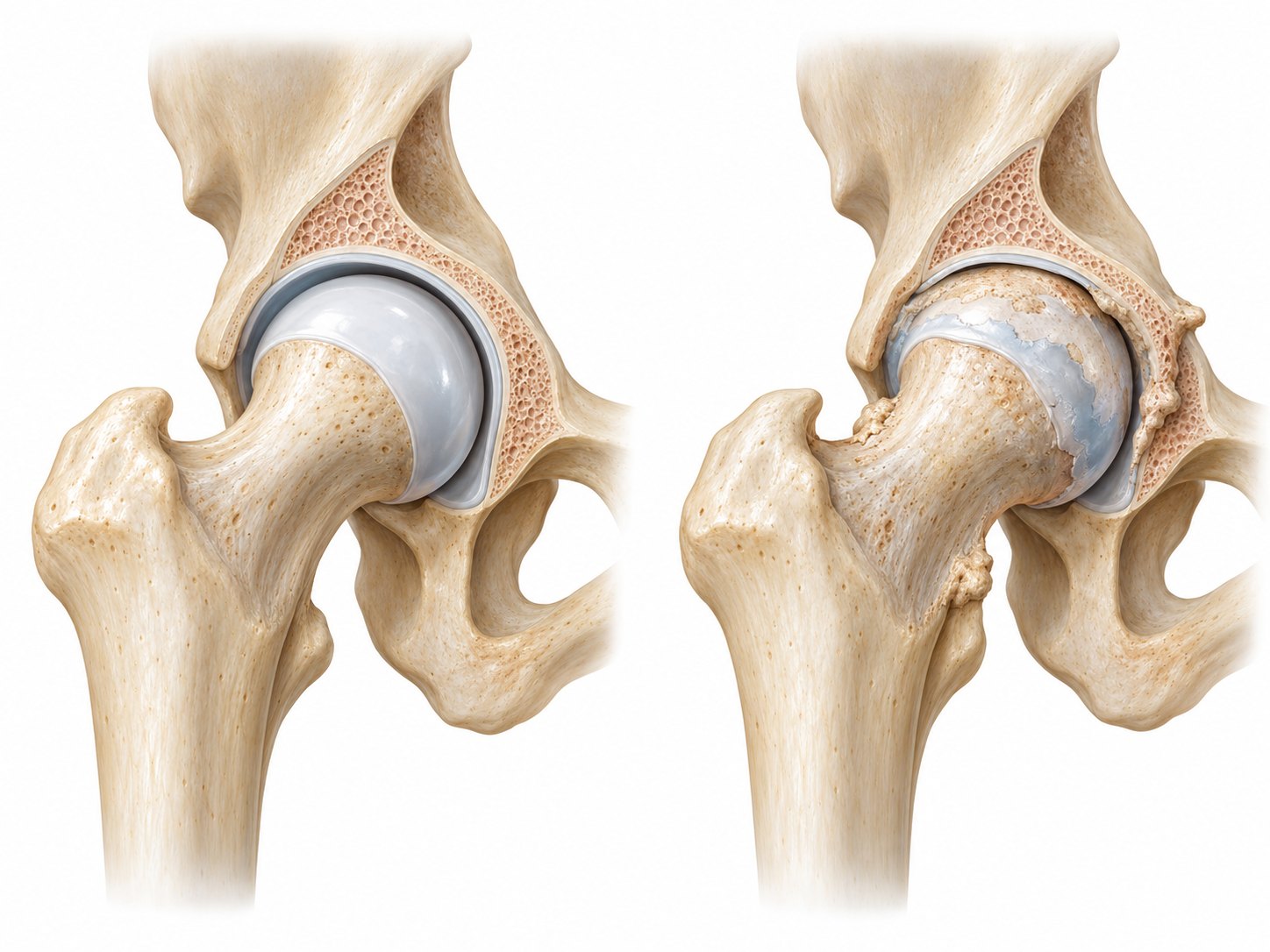
Hip osteoarthritis changes both the smooth joint surface and the bone beneath it.
Cartilage
Healthy cartilage creates a smooth surface between the femoral head and the socket. Arthritis damages this surface and increases friction inside the joint.
Joint space
Cartilage itself does not show directly on a standard X-ray. The space between the bones acts as an indirect sign of how much cartilage remains.
Bone changes
As arthritis advances, the bone can become denser near the damaged surface, develop bone spurs and change shape.
Because the hip joint sits deep in the body, pain from the joint does not always feel as though it comes from the side of the hip. Groin and front-thigh pain are common, and some people feel pain as far down as the knee.
How does Dr. Aniket Patil assess hip arthritis?
The assessment starts with the pattern of pain and what the hip prevents you from doing. Dr. Aniket Patil then checks hip movement, walking and the weight-bearing X-rays.

Pain pattern
Where the pain starts, what brings it on and whether it occurs at rest help separate hip-joint pain from problems in the back, muscles or surrounding tissues.
Hip movement
Dr. Aniket Patil checks how far the hip bends and rotates and whether those movements reproduce the pain.
Walking and daily function
A limp, reduced walking distance and difficulty with stairs, footwear or getting out of a chair show how much the hip is affecting everyday life.
Imaging
Weight-bearing X-rays show the joint space, bone shape and severity of the arthritic changes. Further imaging is useful when the symptoms or X-rays do not fully explain the problem.
The diagnosis is strongest when the pain pattern, examination and imaging point to the hip joint as the source of the symptoms.
What do hip arthritis X-rays show?
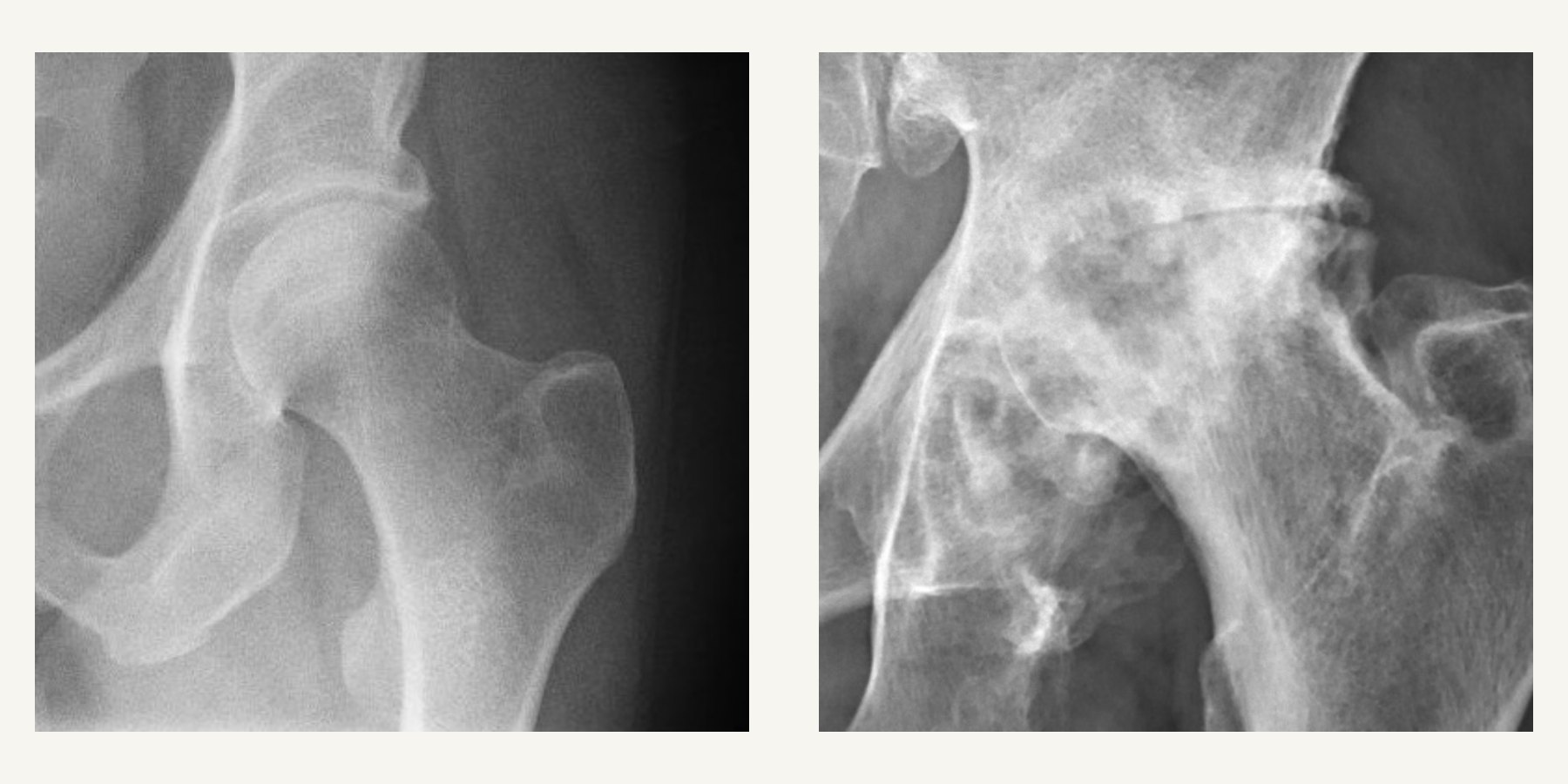
Weight-bearing pelvic and hip X-rays show how much joint space remains, whether the bone has changed shape and whether one or both hips are affected.
-
Joint-space narrowing
Loss of cartilage reduces the visible space between the femoral head and the socket.
-
Bone changes
X-rays can show bone spurs, increased bone density and cyst-like changes around an arthritic joint.
-
Shape and severity
Advanced arthritis can change the shape of the femoral head or socket and show how much of the joint surface is involved.
Dr. Aniket Patil uses the X-rays to understand the structural damage, then matches those findings with pain, hip movement and daily function before recommending treatment.
What treatments help hip arthritis?
Treatment should match the severity of the arthritis, your symptoms, your general health and the activities you need to do in daily life.
-
Non-surgical treatment
Many people start with non-surgical treatment, especially when pain and loss of function remain manageable.
- Exercise & physiotherapy
- Strength, mobility and low-impact exercise can help keep the hip moving and support walking and daily activity.
- Activity changes
- Reducing movements that repeatedly aggravate the hip can make day-to-day symptoms easier to manage.
- Medication
- Pain-relieving or anti-inflammatory medication can help reduce symptoms for some people.
- Weight management
- When relevant, reducing excess body weight can reduce the load placed through the hip during walking and standing.
- Walking aids
- A cane or other walking aid can reduce the load on a painful hip and make walking more comfortable.
- Injections
- A hip injection can sometimes provide short-term symptom relief or help confirm whether the hip joint is the source of pain. Dr. Aniket Patil will explain when an injection makes sense.
-
Surgical treatment
If hip arthritis continues to cause substantial pain or limit walking and daily activities despite non-surgical treatment, Dr. Aniket Patil will assess whether total hip replacement could improve pain and function.
When does Dr. Aniket Patil recommend hip replacement?
Dr. Aniket Patil recommends hip replacement when arthritis causes persistent pain or loss of function, the examination and X-rays support the diagnosis, and non-surgical treatment no longer provides enough relief.
The hip is limiting everyday life
Pain affects walking, stairs, sleep, footwear or other activities that matter to the patient.
Non-surgical treatment is no longer enough
Exercise, activity changes, medication or other non-surgical treatment no longer provides acceptable control of the symptoms.
The examination shows significant loss of function
Hip stiffness, painful movement or a limp supports the clinical picture when it matches the symptoms.
The imaging explains the symptoms
The location and severity of the arthritic changes fit the pain, stiffness and loss of function.
Even advanced arthritis on an X-ray does not automatically lead to replacement. Before recommending surgery, Dr. Aniket Patil looks for agreement between the imaging, symptoms, examination and loss of function.
What does hip replacement involve?
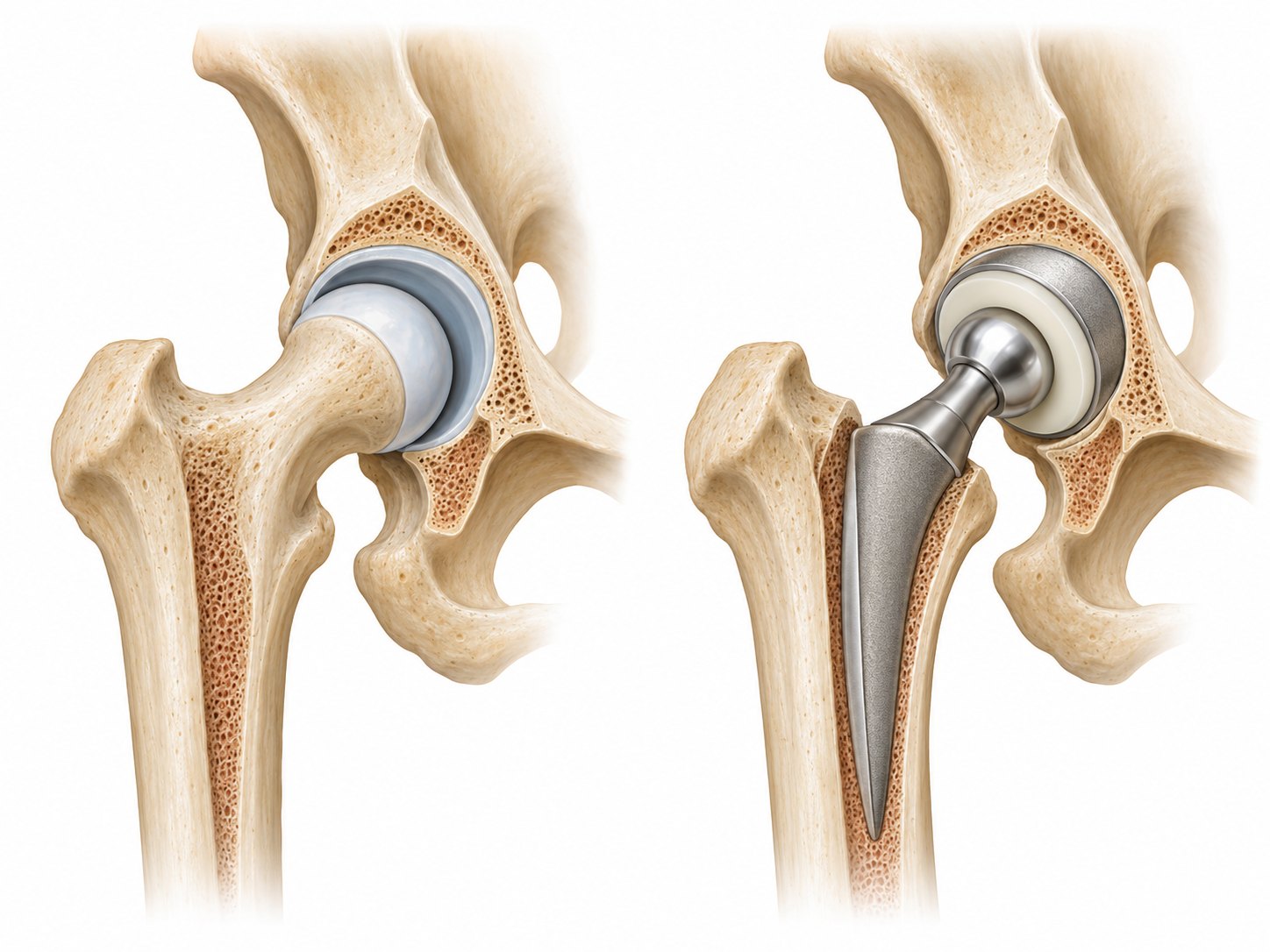
Total hip replacement replaces the damaged ball-and-socket surfaces with implant components. The surgical approach is a separate decision from whether the hip needs replacement.
-
Total hip replacement
The damaged femoral head is replaced, and an implant surface is placed in the socket to create a new bearing for the hip.
Learn about total hip replacement -
Direct anterior hip replacement
The direct anterior approach reaches the hip from the front. It is one way of performing total hip replacement, and suitability depends on the anatomy and clinical situation.
Learn about direct anterior hip replacement
Already recommended hip replacement?
A useful second opinion should do more than repeat the recommendation. It should show whether the clinical findings justify surgery, whether total hip replacement fits the problem and why the timing makes sense.
The question is not only ‘Do I need hip replacement?’ It is also ‘Why now, and what should the operation involve?’
Dr. Aniket Patil reviews your existing X-rays, scans and reports, examines the hip and explains whether he agrees with the recommendation, and why.
Bring your X-rays, scans, reports and details of the treatment you have already tried.
Get a hip replacement second opinion
Your surgeon
Dr. Aniket Patil
Knee & hip replacement surgeon · Pune
Dr. Aniket Patil focuses on knee and hip replacement. For hip arthritis, he assesses the pattern of joint damage, the response to non-surgical treatment and how much the hip is limiting everyday life. When replacement is needed, he plans and performs the operation with robotic assistance.
Hip arthritis FAQs
Common questions about hip arthritis, diagnosis and treatment.
Hip arthritis is a progressive joint condition, but symptoms do not worsen at the same rate in every person. Treatment depends on how much pain, stiffness and loss of function the hip is causing rather than the diagnosis alone.
Yes. Pain from the hip joint can sometimes be felt in the thigh or knee. Dr. Aniket Patil examines the hip and knee when the source of the pain is not clear.
Not usually when the symptoms, examination and weight-bearing X-rays clearly show hip osteoarthritis. MRI can help when the diagnosis is uncertain or another condition, such as AVN, needs to be assessed.
Yes. Exercise, physiotherapy, activity changes, medication, weight management when relevant and selected injections or walking aids can help manage symptoms. Surgery is considered when these measures no longer provide enough relief and the hip is substantially limiting daily life.
Dr. Aniket Patil recommends hip replacement when pain or loss of function is substantial, the examination and X-rays support the diagnosis and non-surgical treatment no longer provides enough relief.
No. Direct anterior describes the surgical approach used to reach the hip. The operation itself is still a total hip replacement.
Yes. Hip arthritis can affect one or both hips. If both hips are symptomatic, Dr. Aniket Patil assesses each side and determines which hip needs treatment first.
Medical references
Patient information on this page is informed by established orthopaedic and medical guidance.
- 01American Academy of Orthopaedic Surgeons: Osteoarthritis of the Hip
- 02American Academy of Orthopaedic Surgeons: The Management of Osteoarthritis of the Hip: Plain Language Summary
- 03National Institute of Arthritis and Musculoskeletal and Skin Diseases: Osteoarthritis: Diagnosis, Treatment, and Steps to Take
Appointments
Discuss your hip arthritis with Dr. Aniket Patil
If hip pain or stiffness is affecting walking, sleep or daily activity, Dr. Aniket Patil can assess the joint, review your X-rays and explain the treatment options.
- Clinic
-
Om Hip & Knee Specialty ClinicUnit No. 202, Second Floor, Velstand
Opposite Reliance Mart, Rakshak Nagar
Kharadi, Pune 411014 Get directions - Hours
- Monday to Saturday
5:00 PM to 10:00 PMBy appointment