Knee arthritis · Pune
Knee arthritis: symptoms, diagnosis and treatment
Dr. Aniket Patil assesses your symptoms, knee movement and weight-bearing X-rays together to determine the pattern and severity of arthritis and which treatment fits the knee.
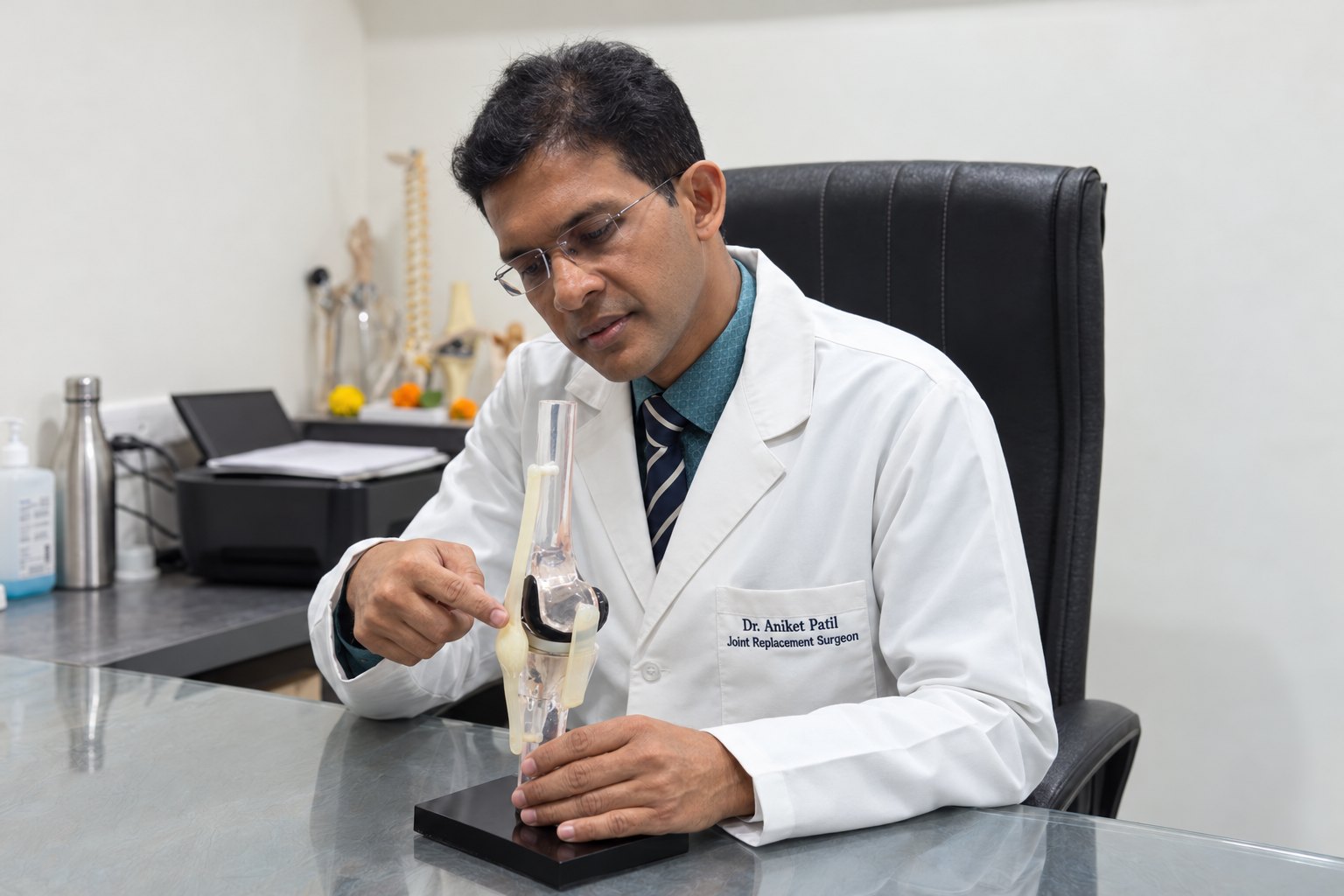
Dr. Aniket Patil · Knee & hip replacement surgeon · Kharadi, Pune
- 20+ years
- Clinical & surgical experience
- 3,000+
- Joint replacement surgeries
- Germany
- Joint replacement fellowship
Clinical review · Dr. Aniket Patil, MS Orthopaedics
Overview
What is knee arthritis?
Knee arthritis most often refers to knee osteoarthritis, a gradual change in the cartilage, bone and other structures within the joint.
Other forms of arthritis and other knee problems can also cause pain, swelling or stiffness, so the diagnosis matters.
Knee osteoarthritis may affect one compartment or several. The pattern of damage becomes important when choosing treatment.
Common knee arthritis symptoms
Pain, stiffness and loss of movement vary from person to person. The key question is how much the knee is affecting everyday life.
-
Pain with activity
Pain commonly increases with walking, standing, stairs or longer periods of activity.
-
Stiffness
The knee may feel stiff after rest and become harder to fully bend or straighten.
-
Swelling
Some people develop swelling or a feeling of fullness around the joint.
-
Creaking or grinding
The knee may feel rough or make creaking or grinding sounds during movement.
-
Loss of movement
Arthritis can gradually reduce how far the knee bends or straightens.
-
Difficulty with daily activities
Walking, stairs, getting up from a chair, work and sleep can all become more difficult.
What happens inside an arthritic knee?
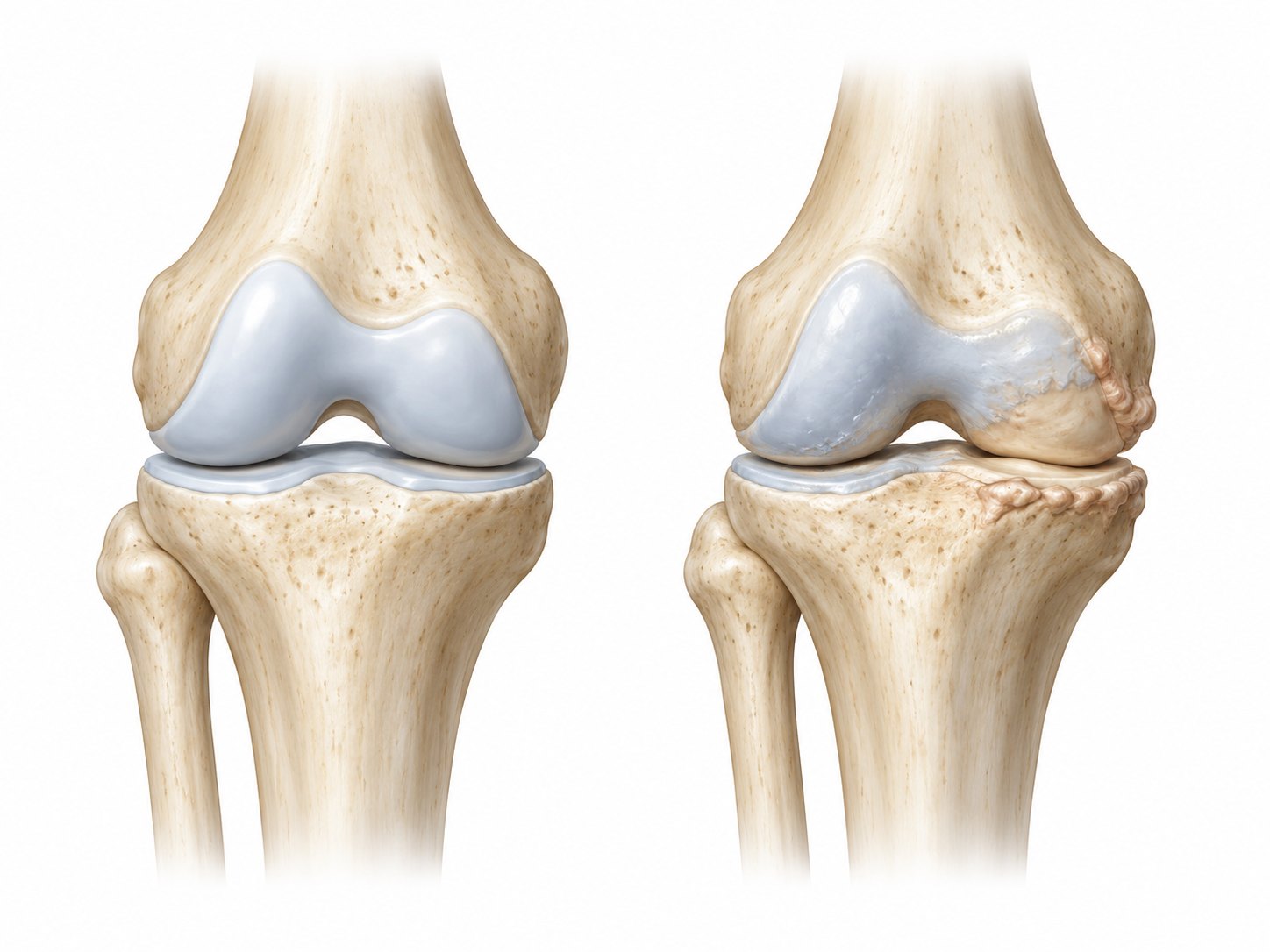
The knee has three main compartments. Arthritis may stay confined to one or involve several, and that pattern matters when choosing treatment.
- Medial compartment
- The inner side of the knee.
- Lateral compartment
- The outer side of the knee.
- Patellofemoral compartment
- The front of the knee, where the kneecap meets the thigh bone.
Healthy cartilage lets the joint surfaces glide smoothly. Osteoarthritis damages cartilage and changes the joint surfaces, which can narrow the joint space seen on X-rays.
Arthritis that affects only one compartment may suit different treatment options from arthritis that affects most of the knee.
How does Dr. Aniket Patil assess knee arthritis?
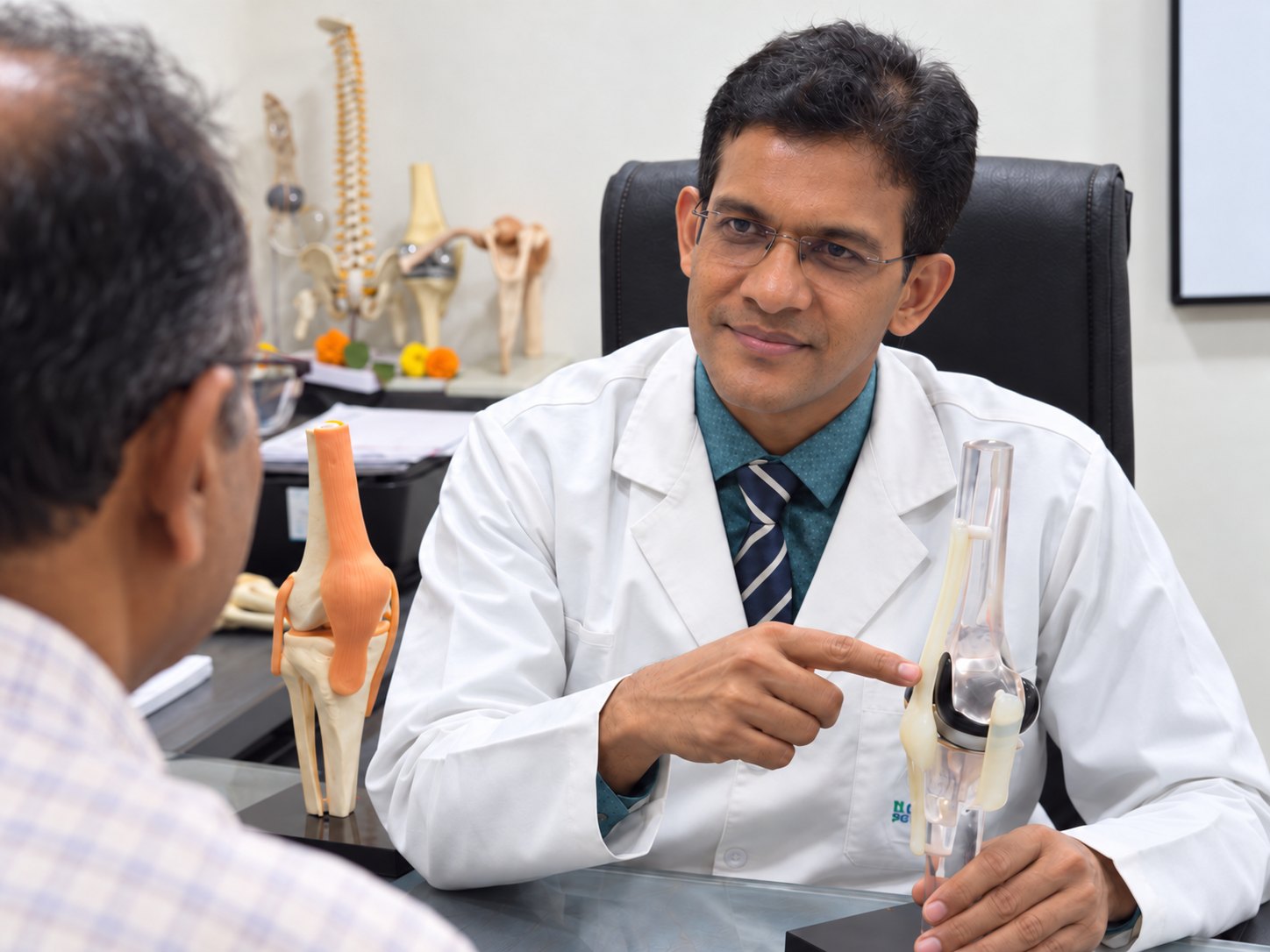
Dr. Aniket Patil combines your symptoms, knee examination and weight-bearing X-rays with the effect on daily function. That gives a more useful picture than any one finding on its own.
- Symptoms
- He asks where the knee hurts, when it hurts and which activities trigger the symptoms.
- Knee examination
- He checks movement, stiffness, tenderness and how the knee functions.
- X-rays
- Weight-bearing X-rays show joint-space loss and the distribution of arthritic change. Dr. Aniket Patil may request other imaging when another problem needs clarification.
- Daily function
- Walking, stairs, work, sleep and other daily activities show how much the arthritis is affecting you.
Dr. Aniket Patil bases treatment on the symptoms, examination, function and imaging together, not on the X-ray alone.
What do knee arthritis X-rays show?
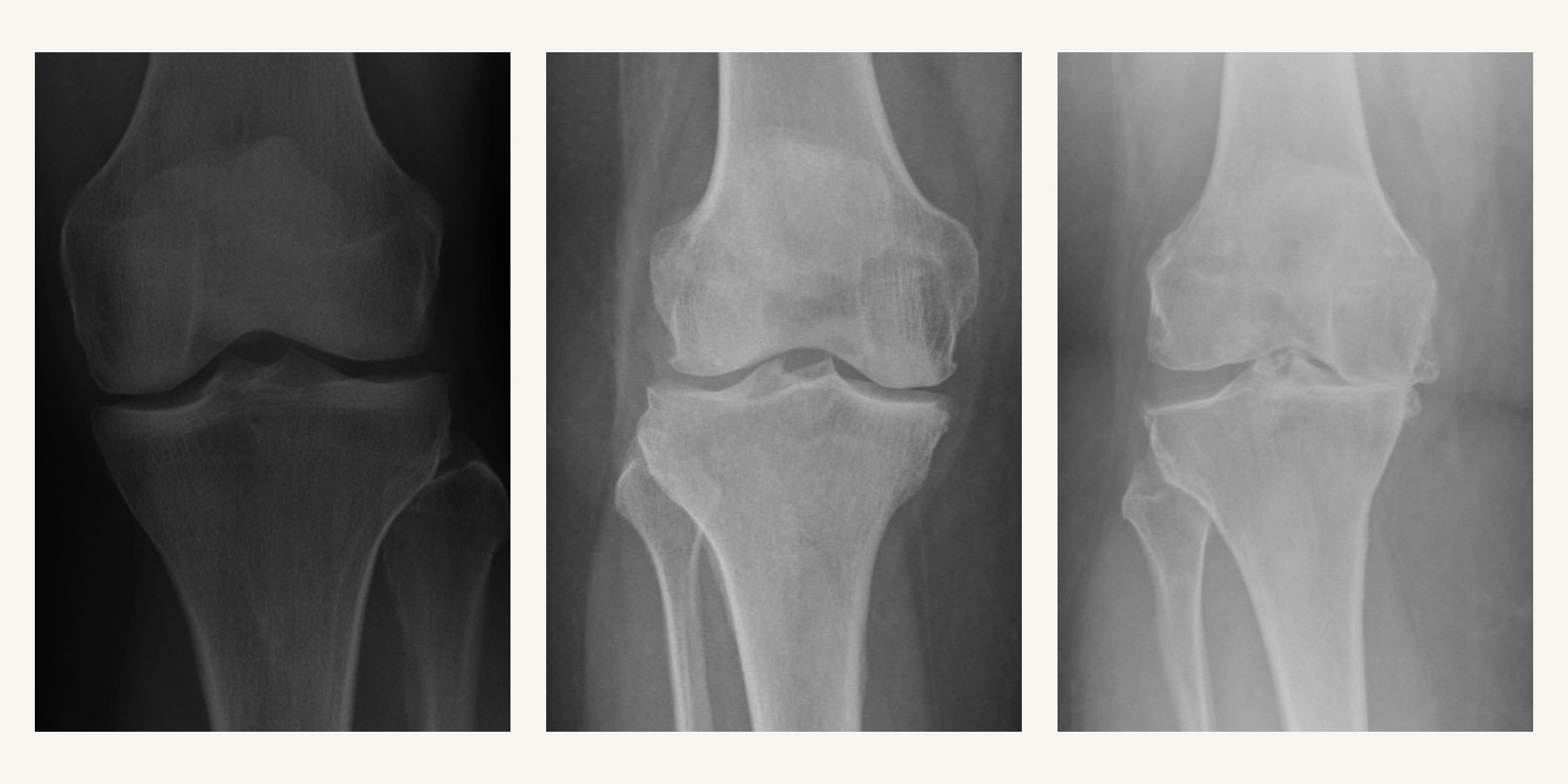
Weight-bearing X-rays show where the joint space has narrowed and how widely arthritis affects the knee. They help define the pattern and extent of damage.
-
Earlier changes
The joint space may remain largely preserved, with relatively subtle arthritic change. Symptoms can still be significant.
-
More established arthritis
Joint-space narrowing and other arthritic changes become easier to see.
-
Advanced joint damage
Marked joint-space loss and more extensive structural change may affect one or several compartments.
Two patients can have similar X-rays and still need different treatment.
One may function well with non-surgical care; another may have pain and loss of function that make replacement a reasonable option.
What treatments help knee arthritis?
Treatment should match the pattern of arthritis, the severity of symptoms, your general health and the activities you need to do in daily life.
-
Non-surgical treatment
Most people start with non-surgical treatment, and many never need an operation.
- Exercise & physiotherapy
- Targeted strengthening, movement and activity programmes can improve function and help control symptoms.
- Activity changes
- Adjusting activities that repeatedly aggravate the knee can reduce symptoms while you stay active.
- Medication
- Medication can help reduce pain for some people.
- Weight management
- Weight management can reduce load on the knee for some patients.
- Injections
- Injections may help reduce symptoms for some people. Whether they are useful depends on the knee and the treatment already tried.
-
Surgical treatment
If knee arthritis continues to limit daily life despite non-surgical treatment, Dr. Aniket Patil will assess whether surgery could improve pain and function. Depending on the pattern of arthritis, he may recommend partial or total knee replacement. If both knees need treatment, he also assesses whether to treat them together or separately.
When does Dr. Aniket Patil recommend knee replacement?
Dr. Aniket Patil recommends knee replacement when arthritis is causing persistent pain or loss of function, the examination and X-rays support the diagnosis, and non-surgical treatment no longer provides enough relief.
Pain limits daily life
Walking, stairs, standing, sleep or other routine activities have become consistently difficult because of the knee.
Non-surgical treatment no longer helps enough
Exercise, physiotherapy, activity changes, medication or injections no longer provide enough relief or function.
Movement has become restricted
Stiffness or loss of motion makes the knee harder to bend, straighten or use.
Symptoms, examination and X-rays align
Together, they show whether arthritis explains the pain, stiffness and loss of function.
Even advanced arthritis on an X-ray does not automatically lead to replacement. Before recommending surgery, Dr. Aniket Patil looks for agreement between the imaging, symptoms, examination and loss of function.
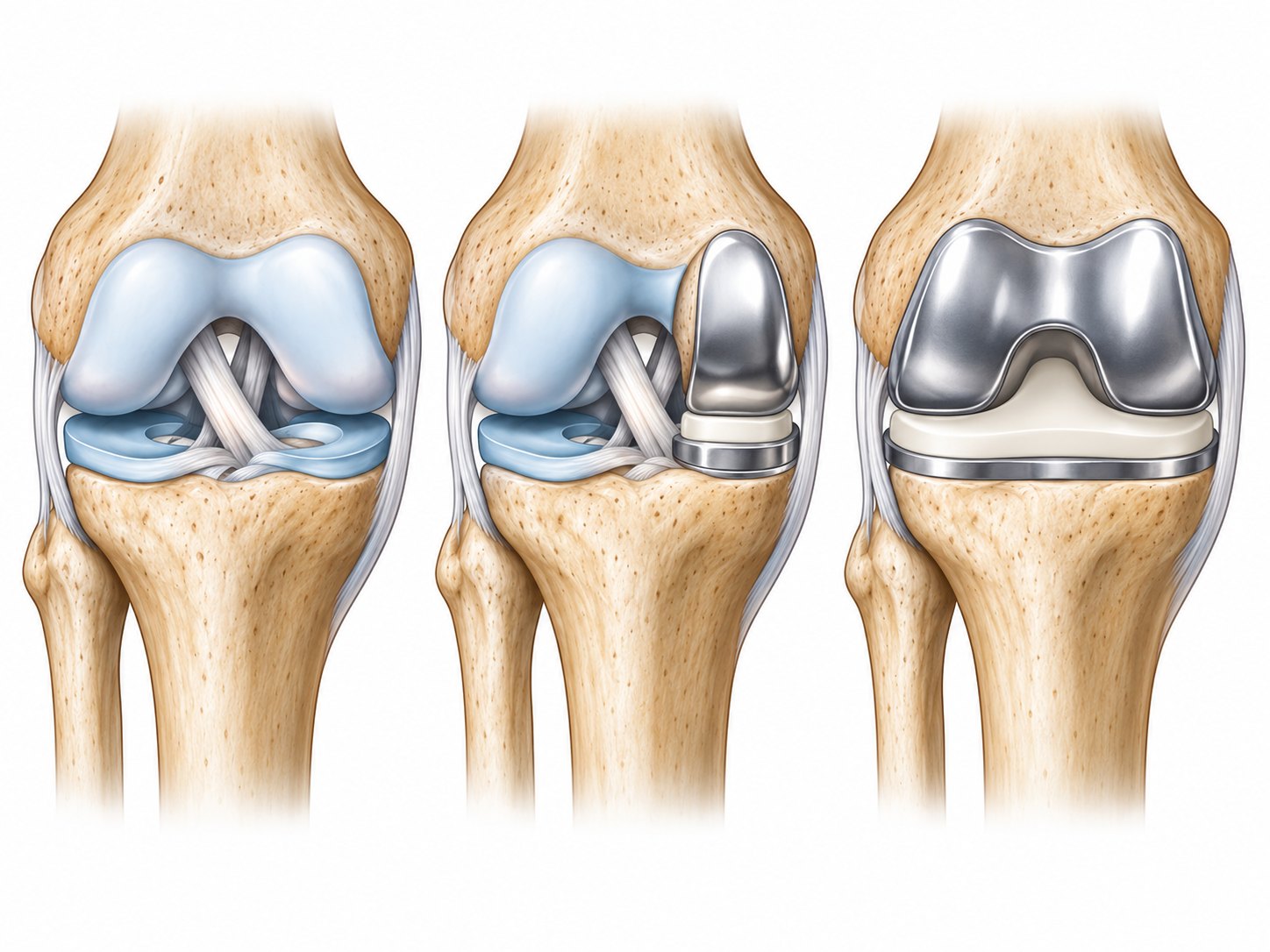
Which knee replacement may be right for me?
The operation depends on which compartments arthritis affects, how much of the knee is damaged and whether one or both knees need treatment.
-
One compartment
Partial knee replacement
Dr. Aniket Patil may recommend partial knee replacement when arthritis affects one compartment and the rest of the knee remains healthy enough to preserve.
-
Most of the knee
Robotic total knee replacement
When arthritis affects most of the knee, Dr. Aniket Patil performs total knee replacement with robotic assistance. The robot does not operate on its own; he plans and performs the surgery.
-
Both knees
Bilateral knee replacement
When both knees have significant arthritis, Dr. Aniket Patil assesses each knee and decides whether to treat them together or separately.
Already recommended knee replacement?
A useful second opinion should do more than repeat the recommendation. It should show whether the clinical findings justify surgery, which operation fits the knee and why the timing makes sense.
The question is not only ‘Do I need knee replacement?’ It is also ‘Which operation, why this operation and why now?’
Dr. Aniket Patil reviews your existing X-rays, scans and reports, examines the knee and explains whether he agrees with the recommendation, and why.
Bring your X-rays, scans, reports and details of the treatment you have already tried.
Get a knee replacement second opinion
About the surgeon
Dr. Aniket Patil
Knee & hip replacement surgeon · Pune
Dr. Aniket Patil focuses on knee and hip replacement. For knee arthritis, he assesses the pattern of damage, the response to non-surgical treatment and which operation fits the knee. If both knees need treatment, he also considers whether to treat them together or separately.
Knee arthritis FAQs
Information on this site is general and does not replace a consultation.
Knee arthritis can progress, but the pace varies. Symptoms and X-ray changes do not always progress together, and many people manage well for years without surgery.
No. Even a ‘bone-on-bone’ X-ray does not decide the treatment by itself. Dr. Aniket Patil also considers symptoms, movement, daily function and the response to non-surgical treatment.
Yes. Most people start with non-surgical treatment. Exercise, physiotherapy, activity changes, medication, weight management and injections may all have a role, depending on the knee and the patient.
Not always. Weight-bearing X-rays usually provide the key imaging for osteoarthritis. Dr. Aniket Patil may request MRI or other imaging when another problem needs clarification.
Yes. If arthritis affects one compartment and the rest of the knee remains healthy enough to preserve, Dr. Aniket Patil may recommend partial knee replacement.
Yes. When both knees have significant arthritis, Dr. Aniket Patil assesses each knee and your overall health before deciding whether to treat them together or separately.
See a knee specialist when pain or stiffness is limiting daily life, treatment no longer helps enough, or another surgeon has recommended replacement and you want another specialist to review the diagnosis, timing or operation.
Medical references
This page draws on the following clinical guidelines.
- 01NICE. Osteoarthritis in over 16s: diagnosis and management. NG226 · 2022
- 02American Academy of Orthopaedic Surgeons. Management of Osteoarthritis of the Knee (Non-Arthroplasty). Clinical Practice Guideline · 2021
- 03American Academy of Orthopaedic Surgeons. Surgical Management of Osteoarthritis of the Knee. Clinical Practice Guideline · 2022
- 04American College of Rheumatology / Arthritis Foundation. 2019 Guideline for the Management of Osteoarthritis of the Hand, Hip, and Knee. Published 2020
- 05Osteoarthritis Research Society International. Guidelines for the Non-Surgical Management of Knee, Hip and Polyarticular Osteoarthritis. 2019
Appointments
Discuss your knee arthritis with Dr. Aniket Patil
Dr. Aniket Patil will assess the knee, explain what the examination and X-rays show, and outline the treatment options that fit the clinical findings.
- Clinic
-
Om Hip & Knee Specialty ClinicUnit No. 202, Second Floor, Velstand
Opposite Reliance Mart, Rakshak Nagar
Kharadi, Pune 411014 Get directions - Hours
- Monday to Saturday
5:00 PM to 10:00 PMBy appointment