Total hip replacement
Total hip replacement in Pune
Total hip replacement replaces the damaged ball and socket of the hip with artificial components. It can relieve pain and restore movement when arthritis, avascular necrosis or other joint damage is making walking and everyday activities difficult.
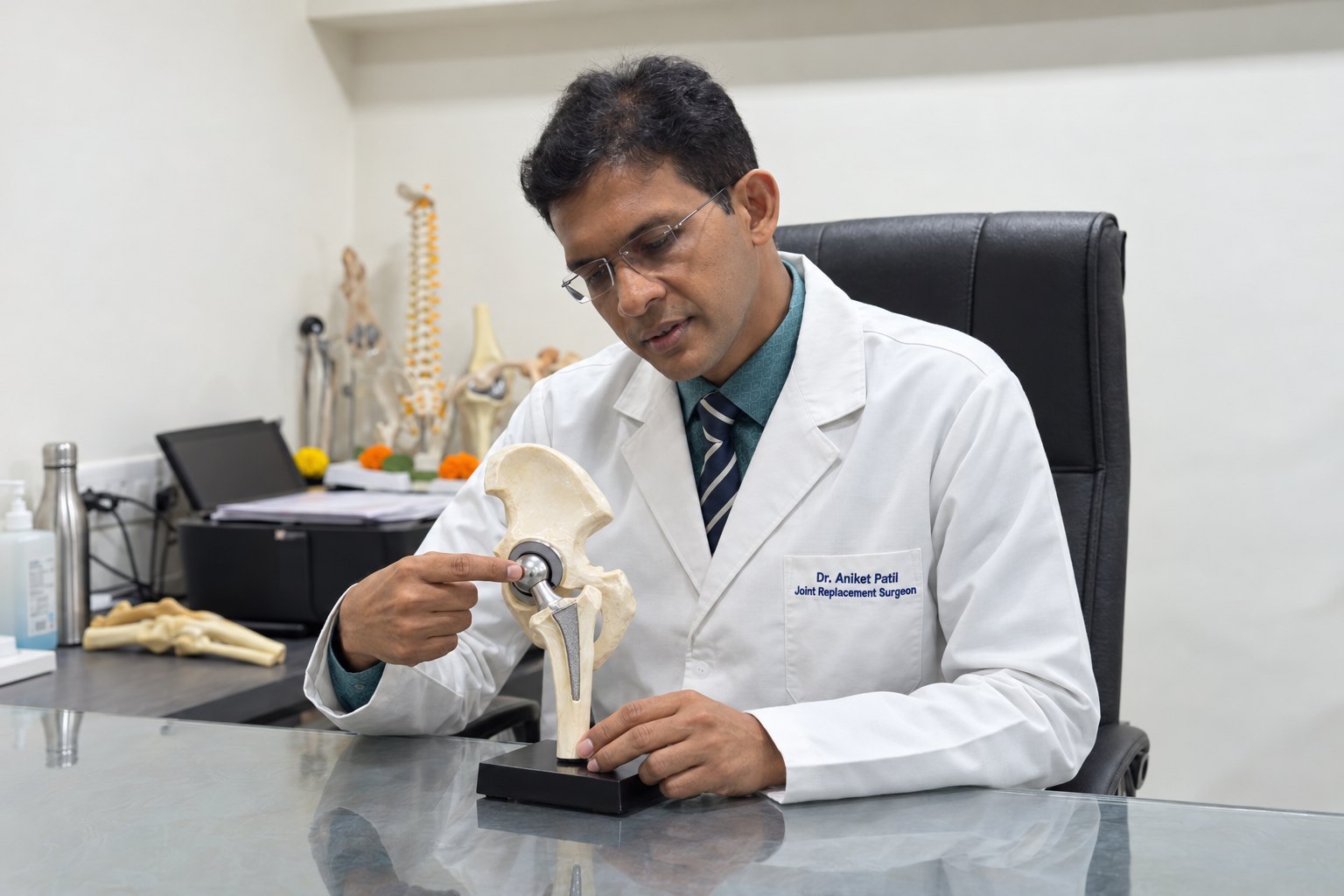
Dr. Aniket Patil · Hip replacement surgeon · Kharadi, Pune
- 20+ years
- Clinical & surgical experience
- 3,000+
- Joint replacement surgeries
- Germany
- Joint replacement fellowship training
Medically reviewed by Dr. Aniket Patil, MS Orthopaedics
Overview
What is total hip replacement?
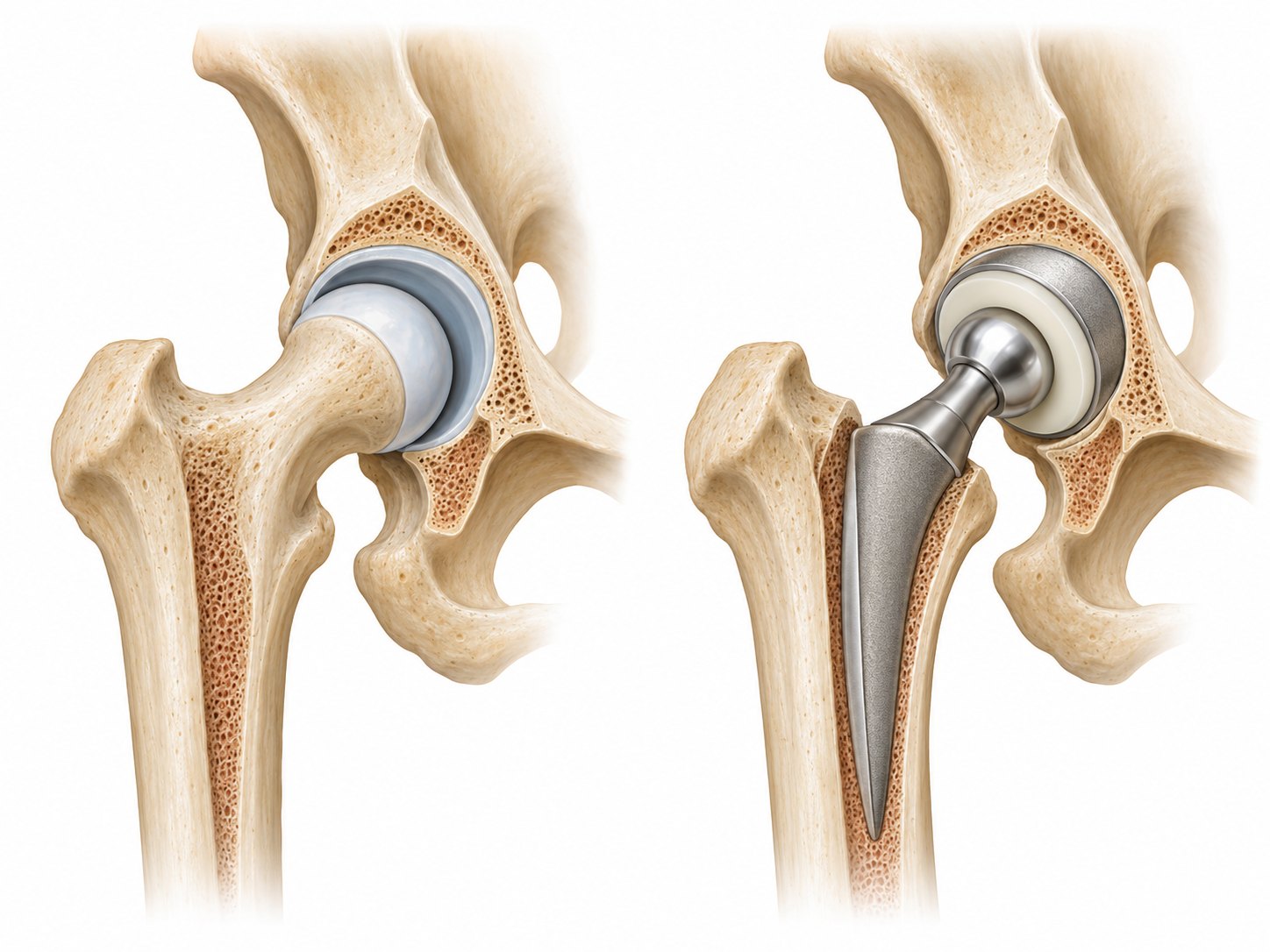
Total hip replacement replaces the damaged ball at the top of the thigh bone and the worn surface of the hip socket.
A stem is placed in the thigh bone and carries a new ball. The socket receives a new cup and liner, creating new bearing surfaces for the joint.
Hip replacement is usually considered when joint damage is severe enough to limit daily life despite non-surgical treatment.
When is total hip replacement recommended?
Hip replacement is usually considered when pain and stiffness are seriously limiting daily life, other treatment is no longer giving enough relief and the examination and imaging confirm advanced damage in the hip.
Pain is limiting everyday life
Walking, stairs, sleep, getting out of a chair and putting on shoes or socks can become difficult.
Non-surgical treatment is no longer enough
Medicines, exercise, activity changes and walking aids are no longer providing acceptable relief.
The symptoms are coming from the hip
The examination helps separate hip-joint pain from pain that may be coming from the back or knee.
Imaging shows advanced joint damage
X-rays, and MRI when needed, show the arthritis, collapse or other structural damage causing the symptoms.
Dr. Aniket Patil combines your symptoms, examination and imaging to decide whether you need hip replacement and how the operation should be planned.
Which surgical approach is used for hip replacement?
Hip replacement can be performed through different surgical approaches. They reach the same joint from different directions.
The approach is chosen according to the hip anatomy, previous surgery and the access needed for the operation.
Dr. Aniket Patil selects the approach that gives him the access needed to position the implants securely.
-
Direct anterior hip replacement
The direct anterior approach reaches the hip from the front through an interval between muscle groups.
Learn about direct anterior hip replacement
What happens during total hip replacement?
Total hip replacement removes the damaged joint surfaces and replaces them with a new ball and socket.
-
Anaesthesia and positioning
You receive the planned anaesthetic and are positioned for the chosen surgical approach.
-
Remove the damaged ball
Dr. Aniket Patil removes the damaged femoral head from the top of the thigh bone.
-
Prepare the socket
The damaged socket surface is prepared and the new cup and liner are positioned.
-
Fit the stem and ball
The thigh bone is prepared, the stem is secured and the new ball is attached.
-
Check the new hip
He checks implant stability, movement and leg length before closing the wound.
What is planned before hip replacement?
Pre-operative planning helps determine how the new hip should fit the individual anatomy.
-
The cause of the joint damage
Arthritis, avascular necrosis, deformity and previous injury can affect the operation.
-
Implant size and fixation
X-rays help estimate component size and how the new hip will be fixed to the bone.
-
Leg length and stability
The plan considers leg length together with movement and stability of the new hip.
-
Surgical approach
Dr. Aniket Patil chooses the approach that gives the access needed for the planned replacement.
How do I prepare for total hip replacement?
Before surgery, the team reviews your health, medicines and home setup so you can go into surgery safely and recover with the support you need.
-
Medical assessment
You may need blood tests, an ECG or other tests depending on your health and anaesthesia plan. Conditions such as diabetes, heart disease and high blood pressure should be well controlled before surgery.
-
Medicines
Give the team a complete list of prescription medicines, blood thinners, diabetes medicines and supplements. You will be told what to continue and what to stop before surgery.
-
Home and support
Arrange transport home, help with daily tasks during the early recovery period and any walking aid or equipment recommended by the physiotherapy team.
-
Admission
Follow the hospital’s fasting and admission instructions. Bring your medical reports, imaging, current medicine list and insurance documents if applicable.
What is recovery like after total hip replacement?
Most patients stand and begin walking soon after surgery. Progress then depends on general health, strength and how safely you can move.
-
In hospital
You begin walking with a frame or crutches and start exercises for movement and strength.
-
The first few weeks
Walking distance increases as pain and swelling settle. Continue the exercises and follow any movement precautions you have been given.
-
Everyday activity
Walking, stairs and everyday activities become easier as strength and confidence improve. Your team will advise when it is safe to drive and return to work.
-
The following months
Walking becomes easier and strength and stamina continue to improve for several months.
What are the risks of total hip replacement?
Infection
Infection around the wound or implant can require further treatment or surgery.
Blood clots
A clot can form in the leg and, less commonly, travel to the lungs. Preventive treatment and early walking reduce the risk.
Dislocation
The new ball can come out of the socket, particularly during the early healing period.
Leg-length difference
The operated leg can feel slightly longer or shorter after surgery. Leg length is checked together with the stability of the new hip during the operation.
Nerve, blood-vessel or bone injury
These are uncommon but recognised complications of hip replacement.
Wear or loosening
Implants can wear or loosen over time and may eventually need revision surgery.
Dr. Aniket Patil discusses the risks that are most relevant to your health, anatomy and planned operation.
How much does total hip replacement cost in Pune?
Hip replacement cost in Pune depends on the implant, hospital, room category and any additional medical care you need.
Once the hip has been assessed and the operation confirmed, the clinic team can give you a more useful estimate.
Hip replacement cost in PuneWill health insurance cover hip replacement?
Yes. Many health insurance policies cover medically necessary joint replacement surgery, subject to the terms of the policy.
Cashless treatment depends on the hospital network, insurer approval and pre-authorisation. Waiting periods, co-pay, room limits and implant limits can affect what is covered.
What affects your coverage
- Waiting period
- Hospital network
- Co-pay
- Room limits
- Implant limits
- Pre-authorisation
Common health insurance providers
- HDFC ERGO
- Niva Bupa
- Care Health Insurance
- Bajaj General Insurance
- Aditya Birla Health Insurance
- Tata AIG
- Digit
- Generali Central Insurance
- Cholamandalam MS
- ACKO
Insurance coverage and cashless eligibility depend on your policy, hospital network and insurer approval.
Already recommended hip replacement?
Dr. Aniket Patil can review whether hip replacement is needed now, whether the diagnosis explains your symptoms and what surgical approach he would recommend.
Which operation, why this operation and why now?
He reviews your symptoms, hip examination and imaging, then explains what he would recommend and why.
Bring your X-rays, scans, reports and details of the treatment you have already tried.
Get a hip replacement second opinion
Your surgeon
Dr. Aniket Patil
Knee & hip replacement surgeon · Pune
Dr. Aniket Patil focuses on knee and hip replacement and has more than 20 years of clinical and surgical experience. He completed joint replacement fellowship training under Prof. Dr. Klaus-Peter Günther at Carl Gustav Carus University Hospital in Dresden, Germany.
Dr. Aniket Patil’s hip practice includes primary and revision replacement. He plans implant position, stability, leg length and surgical approach around the diagnosis and anatomy of the individual hip.
Total hip replacement FAQs
It is usually considered when advanced joint damage causes persistent pain, stiffness and loss of function despite non-surgical treatment.
The damaged ball is replaced with a new ball on a stem, and the socket receives a new cup and liner.
Most patients stand and start walking soon after surgery with a walking aid and help from the physiotherapy team.
It varies with the operation, your general health and how safely you can move after surgery.
Everyday activity usually improves over the first several weeks, while strength and hip function continue improving for several months.
Hip replacements are designed to last many years. Longevity varies with age, activity, implant fixation and other individual factors.
Yes. Dislocation is a recognised risk, particularly during early healing.
Not for every patient. Some studies show advantages during early recovery, but established approaches have similar long-term results when well performed. The best approach depends on the hip and the operation.
The cost depends on the implant, hospital, room category and medical needs.
Yes. Dr. Aniket Patil can review the diagnosis, imaging and proposed operation and explain what he would recommend.
Medical references
- 01American Academy of Orthopaedic Surgeons / OrthoInfo: Total Hip Replacement
- 02NHS: What is a hip replacement?
- 03NHS: Preparing for a hip replacement
- 04NHS: Recovering from a hip replacement
- 05NHS: Complications of a hip replacement
- 06American Academy of Orthopaedic Surgeons / OrthoInfo: Total Joint Replacement
- 07Chen, Kayani & Masri, 2024: CORR Synthesis: To What Degree Does the Direct Anterior Approach Improve Outcomes in THA? A Systematic Evaluation of Meta-analyses (Clinical Orthopaedics and Related Research)
Appointments
Find out whether hip replacement is the right next step
Dr. Aniket Patil can examine the hip, review the imaging and explain whether replacement is needed and which approach best fits the operation.
- Clinic
-
Om Hip & Knee Specialty ClinicUnit No. 202, Second Floor, Velstand
Opposite Reliance Mart, Rakshak Nagar
Kharadi, Pune 411014 Get directions - Hours
- Monday to Saturday
5:00 PM to 10:00 PMBy appointment