Revision hip replacement
Revision hip replacement in Pune
Revision hip replacement repairs or replaces a hip replacement that has become loose, worn, infected, unstable or damaged. The operation depends on what has failed and how much healthy bone remains.
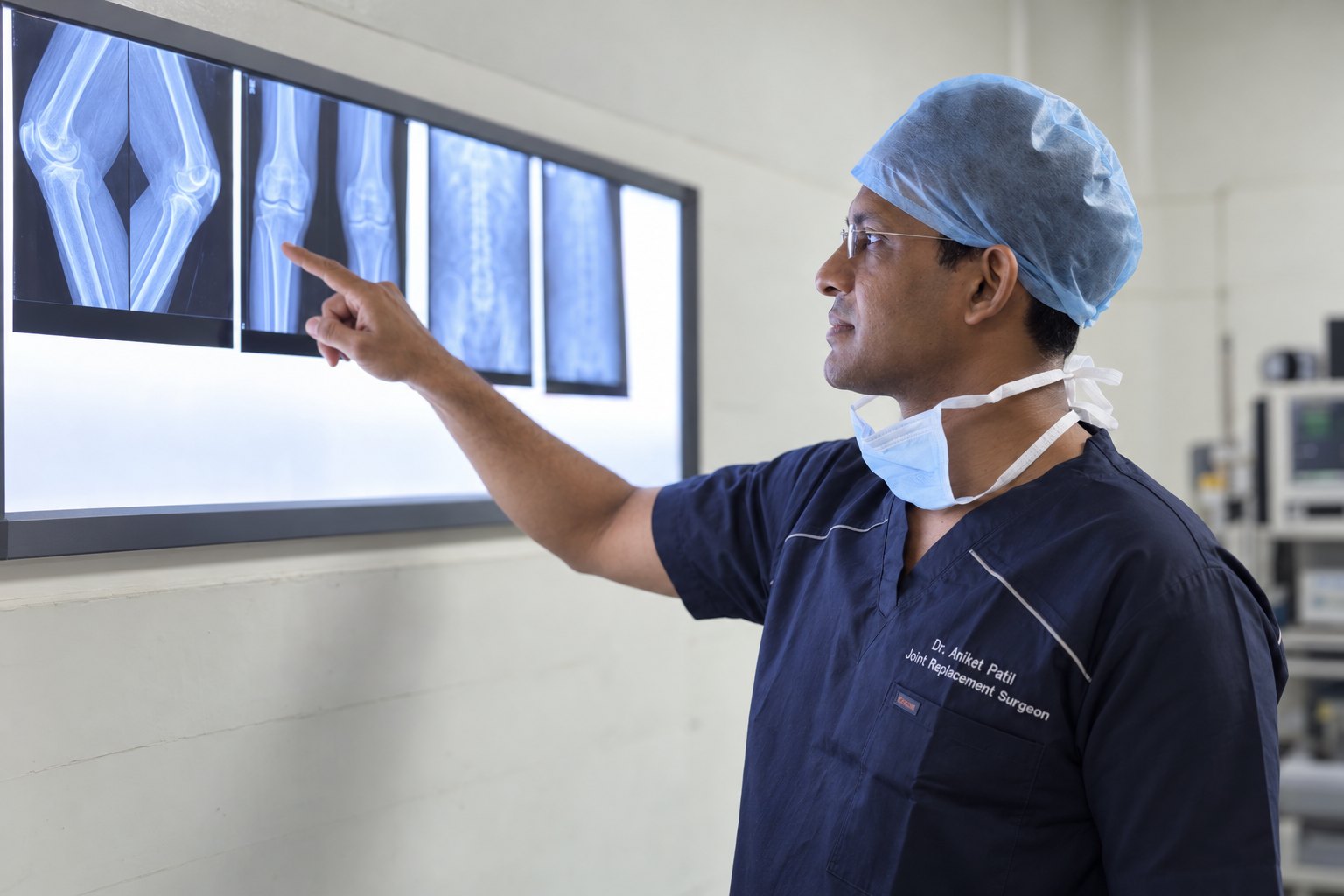
Dr. Aniket Patil · Hip replacement and revision surgeon · Kharadi, Pune
- 20+ years
- Clinical & surgical experience
- 3,000+
- Joint replacement surgeries
- Germany
- Joint replacement fellowship training
Medically reviewed by Dr. Aniket Patil, MS Orthopaedics
Overview
What is revision hip replacement?
Revision hip replacement is surgery to repair or replace part or all of an existing hip replacement when the implant or surrounding bone has developed a problem.
A revision can be relatively limited, such as changing the ball and liner, or much more extensive if implants need to be removed, infection treated or lost bone rebuilt.
Pain after hip replacement can have several causes, so the problem needs to be identified before revision is planned.
Learn about total hip replacementWhy might a hip replacement need revision?
-
Loosening or wear
Components can loosen from the bone or bearing surfaces can wear, causing pain and loss of function. Wear can also damage the surrounding bone.
-
Dislocation or instability
Repeated dislocation may require revision to improve component position or soft-tissue tension.
-
Infection
Infection around the implant can cause pain, wound problems or loosening, sometimes years after the original replacement.
-
Fracture around the implant
A fracture can loosen the implant and damage the bone supporting it.
-
Implant damage or bone loss
A damaged component or severe loss of bone can leave the replacement without secure support.
A failed hip replacement is not one single problem. The cause determines what the revision needs to repair, replace or rebuild.
How is the cause of pain after hip replacement diagnosed?
Dr. Aniket Patil starts with the symptoms, examination and current X-rays, then adds infection tests or CT when more detail is needed.
History and examination
When the symptoms started, where the pain is felt and what makes it worse help separate a problem in the hip from pain coming from the spine. He also checks walking, movement and leg length.
X-rays
Current and previous X-rays can show loosening, wear, fracture, component position and changes in the surrounding bone.
Infection tests
Blood tests and, when needed, fluid taken from the hip help determine whether infection is present.
CT
CT can show component position and bone loss in more detail and helps plan complex reconstruction.
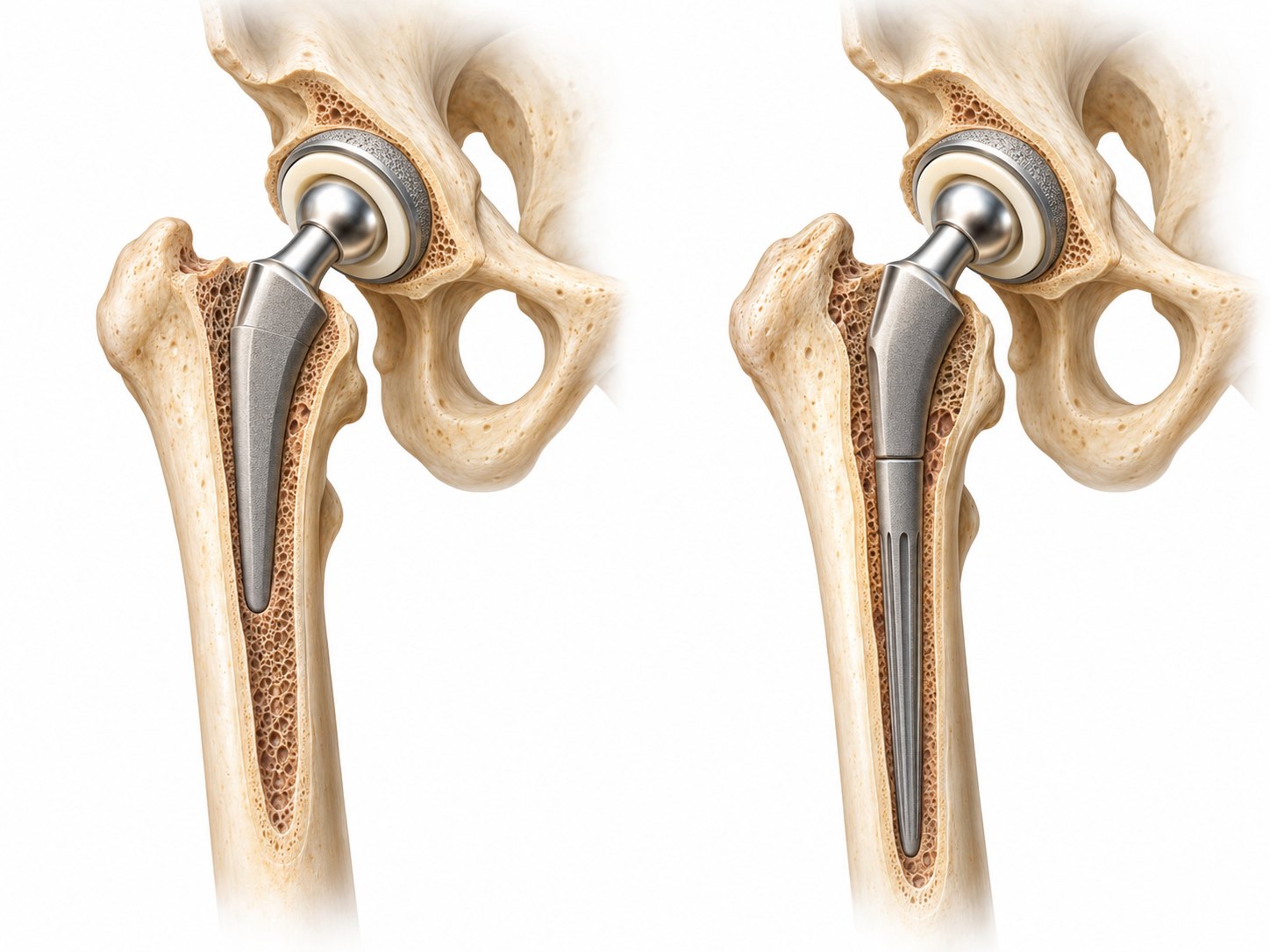
What happens during revision hip replacement?
The operation is designed around which components have failed and the amount of healthy bone that remains.
-
Reach the existing replacement
Dr. Aniket Patil chooses the surgical approach that gives the access required for the revision.
-
Remove what needs to be revised
The components or cement that need revision are removed, along with damaged tissue.
-
Rebuild lost bone
Bone defects may require bone graft, metal augments or specialised revision components.
-
Position the revision implants
The new components are positioned to obtain secure fixation and a stable hip.
-
Check the reconstruction
He checks movement, stability and leg length before closing the wound.
Why are specialised implants sometimes needed in revision hip replacement?
Standard hip-replacement components depend on healthy bone for support.
If loosening, infection or fracture has removed or weakened that bone, a standard implant may no longer have enough support. Revision surgery may therefore require longer stems, specialised sockets, metal augments or bone graft.
Dr. Aniket Patil uses the X-rays and CT findings to determine where support has been lost and how it needs to be rebuilt.
How do I prepare for revision hip replacement?
-
Medical assessment
Revision surgery can be longer and more demanding than a first hip replacement, so medical and anaesthetic assessment is important.
-
Previous operation records
Bring operation notes, implant details, old X-rays, scans and discharge summaries if available.
-
Infection investigations
Bring any previous blood tests, joint-fluid results or microbiology reports.
-
Recovery planning
Arrange walking aids and help at home. Some reconstructions require temporary limits on how much weight you can put through the leg.
What is recovery like after revision hip replacement?
Recovery depends on how extensive the revision is, whether bone or soft tissue has been reconstructed and whether weight bearing needs to be restricted.
-
In hospital
Pain control, medical monitoring and physiotherapy begin after surgery.
-
Weight bearing
Some patients can put full weight through the leg early. Others need temporary restrictions while bone graft, fracture repair or reconstruction heals.
-
Soft-tissue healing
If muscles or tendons have been repaired, movement precautions may be needed while they heal.
-
The following months
Strength and walking improve with rehabilitation. Complex revisions can take longer to recover from than a first hip replacement.
What are the risks of revision hip replacement?
Infection
Revision carries a risk of infection, particularly when infection caused the previous replacement to fail.
Dislocation or instability
Instability is more common after revision than after a first hip replacement because the soft tissues may already be scarred or weakened.
Fracture
Removing old implants and fitting revision components can fracture weakened bone.
Nerve or blood-vessel injury
Scar tissue and altered anatomy can make these structures more difficult to protect.
Blood clots
Preventive treatment and early walking help reduce the risk.
Further revision
Revision implants can later loosen, wear or develop other problems.
Dr. Aniket Patil discusses your individual risk after reviewing why the hip failed, the condition of the bone, previous surgery and the reconstruction required.
How much does revision hip replacement cost in Pune?
Revision hip replacement cost depends on which components need to be changed, whether specialised revision implants or bone reconstruction are required and the complexity of the operation.
Hospital, room category and additional medical care also affect the total. A useful estimate follows the imaging and revision plan.
Hip replacement cost in PuneWill health insurance cover revision hip replacement?
Yes. Many health insurance policies cover medically necessary joint replacement surgery, subject to the terms of the policy.
Cashless treatment depends on the hospital network, insurer approval and pre-authorisation. Waiting periods, co-pay, room limits and implant limits can affect what is covered.
What affects your coverage
- Waiting period
- Hospital network
- Co-pay
- Room limits
- Implant limits
- Pre-authorisation
Common health insurance providers
- HDFC ERGO
- Niva Bupa
- Care Health Insurance
- Bajaj General Insurance
- Aditya Birla Health Insurance
- Tata AIG
- Digit
- Generali Central Insurance
- Cholamandalam MS
- ACKO
Insurance coverage and cashless eligibility depend on your policy, hospital network and insurer approval.
Been told your hip replacement needs revision?
Dr. Aniket Patil can review why the hip is painful or failing and what a revision would need to repair or rebuild.
What has failed, is revision needed and what has to be rebuilt?
He checks for infection, which components are loose or worn, how much bone has been lost and whether any parts of the existing replacement can remain.
Bring current and previous X-rays, operation records, implant details and any infection test results.
Get a hip replacement second opinion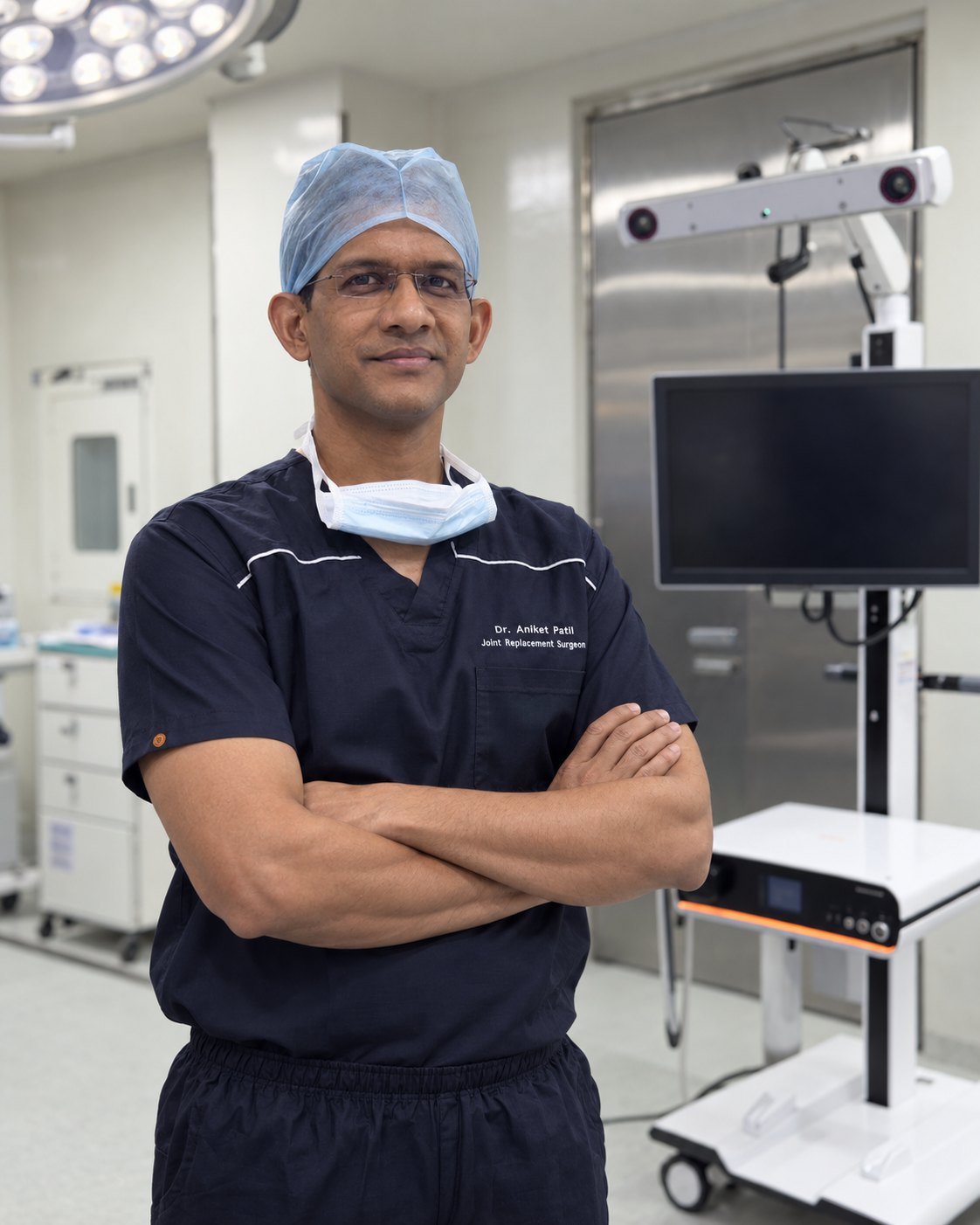
Your surgeon
Dr. Aniket Patil
Knee & hip replacement surgeon · Pune
Dr. Aniket Patil focuses on knee and hip replacement and has more than 20 years of clinical and surgical experience. He completed joint replacement fellowship training under Prof. Dr. Klaus-Peter Günther at Carl Gustav Carus University Hospital in Dresden, Germany.
Revision hip replacement requires both diagnosis and reconstruction. Dr. Aniket Patil first identifies why the existing replacement has failed, then plans which components need to change, how lost bone will be rebuilt and which surgical approach gives the required access.
Revision hip replacement FAQs
New or increasing pain, instability, repeated dislocation, a new limp or wound problems should be assessed. Imaging and other tests are needed to identify the cause.
No. Revision is useful only when the investigation identifies a problem that another operation can correct.
Yes. Some revisions change the ball and liner, socket or stem alone. Others require several components to be replaced.
Existing implants, scar tissue, bone loss, infection or fracture can make implant removal and reconstruction more demanding than a first hip replacement.
The investigation can include blood tests and, when needed, fluid taken from the hip together with the examination and imaging.
If the bone supporting the replacement has been damaged, standard components may not have enough secure support. Bone graft, augments or revision implants can be used to rebuild it.
It can. Recovery depends on the extent of the revision, the condition of the bone and whether weight bearing needs to be restricted.
Yes. Instability is a recognised risk after revision because the muscles and other soft tissues may already be weakened or scarred.
The cost depends on the components and reconstruction required, so a useful estimate follows the revision plan.
A second opinion is particularly useful when the cause of pain is uncertain, infection is suspected or more than one revision strategy is possible.
Medical references
- 01American Academy of Orthopaedic Surgeons / OrthoInfo: Revision Total Hip Replacement
- 02American Academy of Orthopaedic Surgeons / OrthoInfo: Total Hip Replacement
- 03NHS: Complications of a hip replacement
- 04NHS: Recovering from a hip replacement
- 05American Academy of Orthopaedic Surgeons / OrthoInfo: Infection After Joint Replacement
Appointments
Find out what is causing problems with your hip replacement
Dr. Aniket Patil can review the implant, surrounding bone and infection tests and explain what revision surgery would need to correct or rebuild.
- Clinic
-
Om Hip & Knee Specialty ClinicUnit No. 202, Second Floor, Velstand
Opposite Reliance Mart, Rakshak Nagar
Kharadi, Pune 411014 Get directions - Hours
- Monday to Saturday
5:00 PM to 10:00 PMBy appointment