Knee Meniscus Tear Treatment In Pune
Medically reviewed by Dr. Aniket Patil.
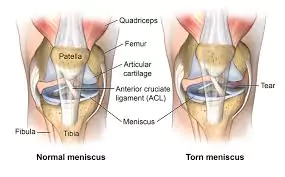
The meniscus is a cushion between the upper and lower bones of the knee. It prevents friction between bones in the knee joint and provides stability to the knee joint. The most common reasons for meniscus injury are sports injuries and road traffic accidents. The medial knee meniscus is injured most commonly. Dr. Aniket Patil provides advanced Meniscus Tear Treatment in Pune and Meniscus Injury Treatment in Kharadi Pune for patients suffering from meniscus tears with proper diagnosis and personalized treatment plans. Meniscus tear treatment is successfully done nowadays with advanced techniques and instruments of arthroscopy (Keyhole surgery).
Knee Pain Treatment In Pune
The treatment for knee pain depends on the underlying cause of the pain. Here are some general treatments that may help alleviate knee pain:
Rest and ice: Resting the knee and applying ice for 15-20 minutes several times a day can help reduce swelling and pain.
Compression: Wearing a compression bandage or brace on the knee can provide support and reduce swelling.
Elevation: Elevating the knee above the level of the heart can also help reduce swelling.
Pain medication: Over-the-counter pain medication such as acetaminophen or ibuprofen can help alleviate pain and reduce inflammation.
Physical therapy: Exercises that help strengthen the muscles around the knee and improve flexibility can help reduce pain and prevent future injuries.
Surgery: If the knee pain is caused by a serious injury or condition, such as a torn ligament or osteoarthritis, surgery may be necessary.
It’s important to consult with a doctor to determine the underlying cause of knee pain and develop a treatment plan that is appropriate for the individual.
Knee joint and ligaments Meniscus Tear Treatment In Pune
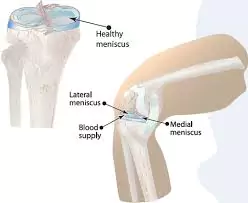
The weight-bearing surfaces of the knee are covered with a layer of protective cartilage. There are also “shock absorbers” on either side of the knee joint between the cartilage held in the femur and the tibia. These shock absorbers are formally named the medial meniscus and the lateral meniscus. These are horseshoe shaped and help to both centers the knee joint during activity and minimize the stress on articular cartilage.
The medial and lateral collateral ligaments stabilize the knee from side-to-side, allowing the knee to hinge into flexion (bent position) and extension (straightened position).
In knee replacement surgery the anterior cruciate ligament (ACL) is one of a pair of ligaments in the middle of the knee joint that forms a cross, hence the name “cruciate.” There are an anterior cruciate ligament and a posterior cruciate ligament (PCL) in the knee. Both of these ligaments stabilize the knee from front to back during normal activity or physical exertion.
What Is a Meniscus Tear?
The meniscus is a C-shaped cushion of cartilage between the thigh bone (femur) and shin bone (tibia). It absorbs shock, prevents friction between the bones, and keeps the knee joint stable during movement. Each knee has two menisci — the medial (inner) and lateral (outer) — and the medial meniscus is injured most often.
Meniscus tears most commonly happen during sports injuries, sudden twisting movements, or road traffic accidents. Age-related wear and tear can also weaken the cartilage, making it more prone to tearing even during everyday activities.
Symptoms of Meniscus Knee injury
- Pain along the joint line, especially when twisting or squatting
- Swelling and stiffness that develops within the first 24 hours of injury
- Locking of the knee — the joint suddenly gets stuck in a bent position because a torn fragment blocks normal movement, making it difficult to straighten the leg fully
- Clicking or popping sounds from the joint — caused by loose cartilage fragments catching between the femur and tibia during movement, often accompanied by a sensation of the knee “giving way”
- Reduced range of motion and a feeling of instability while walking or climbing stairs
Treatment Options
Not every meniscus tear needs surgery. Your orthopedic surgeon will recommend a treatment path based on the size, location, and pattern of the tear:
Non-Surgical Treatment
Small, stable tears in the outer (well-vascularized) portion of the meniscus often heal on their own. Treatment typically includes rest, ice, compression and elevation (RICE), anti-inflammatory medication, and a structured physiotherapy program to restore strength and mobility.
Surgical Treatment — Knee Arthroscopy
When a tear is large, unstable, or causing persistent symptoms, arthroscopic (keyhole) surgery is recommended. This minimally invasive procedure uses a small camera and fine instruments inserted through tiny incisions, so recovery is faster and post-operative pain is significantly lower than with open surgery. Two main surgical approaches are used, depending on the tear:
- Partial Meniscectomy — the damaged portion of the meniscus is trimmed and removed
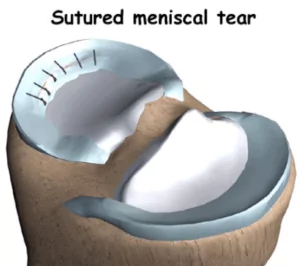
- Meniscus Repair — the torn edges are sutured back together using suture anchors, preserving as much of the meniscus as possible
Because arthroscopy involves smaller wounds, patients typically experience reduced hospitalization time (often a single day), faster return to mobility, and quicker overall recovery compared to traditional open surgery.
How it happens….
Most meniscus knee injuries happen during sports and fitness activities that can put stress on the knee:
- Suddenly slowing down and changing direction (cutting)
- Pivoting with your foot firmly planted
- Landing from a jump incorrectly
- Stopping suddenly
- Receiving a direct blow to the knee
Meniscus Tear Treatment in PCMC Options
Non-operative treatment-
In physiotherapy, a course of physical therapy may relieve pain for individuals who are relatively inactive, engage in moderate exercise and recreational activities, or play sports that put less stress on the knees.
Operative treatment-
Arthroscopic knee meniscus surgery is generally recommended if:
- You’re an athlete and want to continue in your sport, especially if the sport involves jumping, cutting or pivoting
- More than one ligament with the meniscus in your knee is injured
- The injury is causing your knee to buckle during everyday activities
- You’re young (though other factors, such as activity level and knee instability, are more important than age)
Arthroscopic Meniscus tear surgery
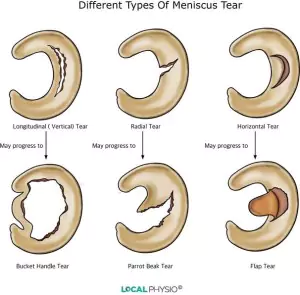
Meniscus injury surgery nowadays with the help of advanced science and technology have done by keyhole surgery that is Knee arthroscopic surgery. Depending on the size and pattern of tear, surgery options have opted.
- Partial Meniscectomy- an Injured portion of the meniscus is removed
- Meniscus repair- an Injured portion of the meniscus is sutured with suture anchors
Advantages of Arthroscopic Meniscus tear surgery
- Postoperative pain is greatly reduced due to the minimally invasive character of the surgical intervention (arthroscopy) and to the smaller size of the wound. Recovery is early.
- Good mobility of the knee is obtained very rapidly.
- Active mobilization of the patient is early.
- Through the faster postoperative recovery and the significant decrease of the postinterventional pain, the hospitalization costs are substantially decreased by lowering the dose of analgesics and anti-inflammatory medication, and particularly by reducing the period of hospital stay (from 1 to 2days on the average).
Recovery After Meniscus Tear Treatment In Pcmc
After knee replacement surgery patient has to perform physiotherapy to regain power and movement of the knee joint. After surgery patient will start to walk from the next day. Physiotherapy to alleviate pain and swelling, restore range of motion (ROM) and strength, and improve mobility. Physical therapy for the knee joint is divided into phases. By following this protocol, or one similar, you should be able to walk after meniscus tear surgery in pune by the end of the third to six weeks after your operation. Of course, everyone heals and responds to treatment at different rates. If you’re planning to have Knee Pain Treatment In Pune, here’s a general idea of what to expect when you start physical therapy afterward.
Advantages of Knee pain Treatment
- Lower need for medications
- Lower need for surgery
- Improved mobility
- Improved balance
- Reduced pain in the future
Why Choose Dr. Aniket Patil for Meniscus Tear Treatment in Pune, Kharadi & PCMC
Dr. Aniket Patil is an orthopedic and joint replacement surgeon based in Pune and Pimpri Chinchwad (PCMC), with experience treating patients from across Maharashtra, including Satara, Sangli, Kolhapur, and Solapur. Using advanced arthroscopic technique, he offers precise, minimally invasive treatment for meniscus tears — with a focus on preserving the meniscus wherever possible to protect long-term knee health.
FAQ's
Orthopedician or orthopedic doctors specialize in treating bone and joint-related problems. Ideally, when your knee is paining, you should visit an orthopedic doctor for treatment.
Genicular nerve radiofrequency ablation is a minimally invasive treatment for knee pain due to osteoarthritis of the knee, and can significantly reduce pain, especially for adults who are 50 and older
Walking as a form of exercise has enormous benefits, particularly for older adults. It’s easy on the joints and helps boost heart health and improve circulation and balance. And new research now suggests that taking a walk can reduce and prevent knee pain related to osteoarthritis, the most common form of arthritis
Recovery depends on the severity of the tear and treatment type.
Meniscus trimming: Recovery in 2–3 weeks
Meniscus repair: Full recovery may take 4–6 weeks or more
Rehabilitation with physiotherapy centres in Kharadi is vital for healing and mobility.
Leading orthopedic clinics and hospitals in Kharadi offer specialized care for meniscus tears and knee injuries. Choose a clinic with experienced arthroscopy surgeons, physiotherapists, and good post-op care.
In Kharadi, treatment options include:
Physiotherapy for mild tears
Medication and rest
Arthroscopic meniscus surgery for severe cases
Consult an orthopedic specialist for a customized meniscus knee treatment plan based on your condition.
Arthroscopic meniscus surgery is a minimally invasive procedure where a camera and surgical tools are inserted through small incisions to trim or repair the torn cartilage. It’s a common outpatient procedure with quick recovery.
Yes, mild meniscus tears can be managed with:
- Rest and elevation
- Anti-inflammatory medication
- Physical therapy
However, for large or complex tears, surgical intervention may be the best solution. Dr. Aniket Patil provides Meniscus Injury Treatment in Kharadi Pune with both non-surgical and surgical treatment options based on the severity of the injury.
PAIN FREE LIFE JUST A CLICK AWAY
⚠️ Medical Disclaimer
The information provided on this website is for educational and informational purposes only and should not be considered medical advice, diagnosis, or treatment. Always consult Dr. Aniket Patil or a qualified healthcare professional for proper diagnosis and personalized treatment recommendations.