
Can You Sit Cross-Legged After Robotic Knee Replacement?
In India, the floor serves as the heart of the home. Families gather there for daily meals, social events, and traditional prayers.
Because of this, one of the most frequent questions patients raise involves their future mobility. Maintaining cultural traditions remains a top priority during the recovery process.
Chronic knee pain often stops these cherished daily activities. Reclaiming your active life starts with understanding your surgical options and long-term healing goals.
Modern robotic methods offer enhanced precision for better outcomes. This guide explores if you can sit in a cross-legged way after a surgery of this type.
We look at how new technology impacts your range of motion. We also provide safety tips for returning to your usual household routines.
Key Takeaways
- Floor-based activities hold deep cultural and spiritual value in Indian homes.
- Advanced surgical tools help restore a more natural range of motion.
- Consistent physical therapy supports the transition to complex leg positions.
- Medical advice determines the best timeline for attempting deep bends.
- Successful knee replacement results depend on individual healing and implant type.
- Setting realistic milestones ensures the longevity of your new joint.
Understanding Robotic Knee Replacement Surgery
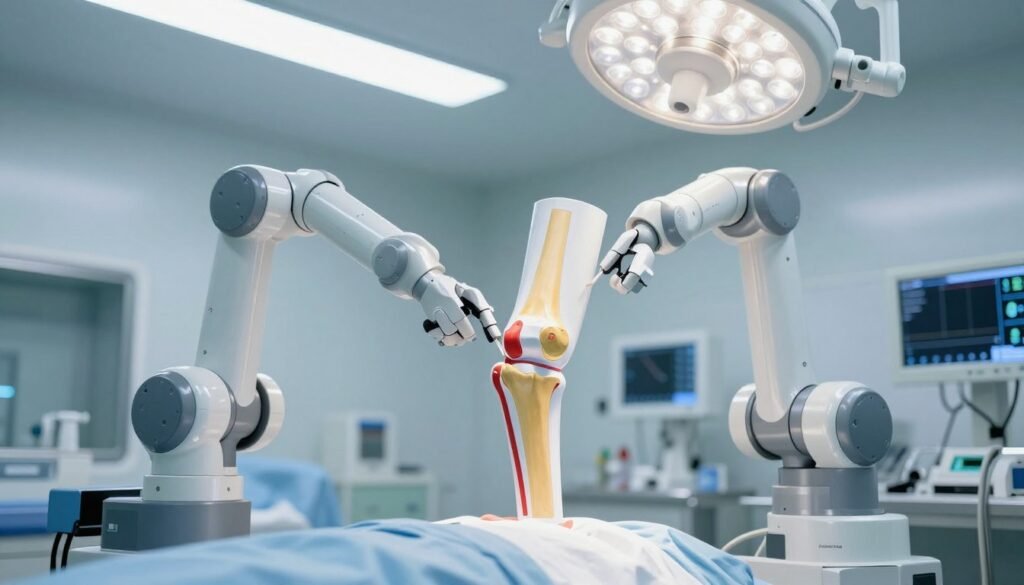
Robotic technology has revolutionized how patients approach knee replacement surgery. Many individuals now search for robotic knee replacement surgery near me to find advanced care options. This modern procedure offers a personalized approach to restoring mobility.
What Makes Robotic Surgery Different from Traditional Methods
Robotic systems use 3D mapping technology to analyze your unique bone structure. Unlike traditional methods that use standard angles, surgeons use kinematic alignment for better results. This ensures the robot provides submillimeter precision with 0.5mm accuracy during the surgery.
This high level of detail ensures optimal ligament balancing for every patient. It also helps in bone preservation, which keeps more of your natural anatomy intact. Such precision often leads to a more natural-feeling joint after the operation.
Traditional surgery often relies on mechanical guides and general measurements. In contrast, robotics allow for a plan tailored specifically to your anatomy. This technology reduces tissue trauma and improves overall stability.
How the Artificial Knee Joint Functions
The replacement surgery involves removing damaged cartilage and bone surfaces. Experts replace these areas with metal and medical-grade plastic parts. These components work together to recreate the natural movement of a knee joint.
The new joint consists of a femoral component and a tibial base. A polyethylene insert sits between them to act as a smooth bearing surface. The replacement surgery creates a stable foundation for daily activities.
These prosthetic parts replicate the natural knee joint mechanics perfectly. By restoring the correct alignment, the system helps reduce pain during movement. This allows the limb to function smoothly during various physical tasks.
The Role of High-Flex Implants
Specialized implants are a key part of achieving deep knee bends. Standard designs usually offer 110 to 120 degrees of flexion. However, high-flex designs can achieve 140 to 155 degrees of bending.
These components feature modified geometry to allow for a greater range of motion. This extra flexibility is vital for people who wish to return to traditional floor sitting. Through advanced technology, the surgery aims to restore full functional independence.
Can You Sit Cross-Legged After Robotic Knee Replacement? The Medical Answer
Surgeons prioritize stability and longevity when performing a total knee replacement. While robotic technology improves precision, the physical limits of the replacement hardware still dictate your range of motion. A successful knee replacement usually restores quality of life while requiring realistic movement goals.
| Activity | Flexion Required | Implant Capability |
|---|---|---|
| Walking | 60° – 70° | 110°+ |
| Climbing Stairs | 90° – 100° | 110°+ |
| Floor Sitting | 135° – 150° | 110° – 130° |
Knee Flexion Requirements for Cross-Legged Sitting
To sit cross-legged comfortably, your knee must achieve a deep flexion of 135 to 150 degrees. This position also requires significant internal rotation and strong supporting muscles to maintain stability. To achieve a cross-legged pose, your knee needs deep flexion that exceeds most daily activities like walking or climbing stairs.
Why Most Knee Replacements Have Movement Limitations
An artificial knee does not function exactly like a natural knee because of mechanical design and tighter soft tissues. Standard implants typically allow for 110 to 130 degrees of bending. Scar tissue can also limit the flexibility of the replacement over time.
The Reality vs Expectations
While some high-flex designs might reach 155 degrees, most patients should view cross-legged sitting as an occasional activity. Every knee replacement aims for pain-free mobility rather than extreme athletic flexibility. The outcome often depends on the type of replacement used and your individual healing process.
Many people find that their new knee replacement works best when they follow professional guidance. Staying active helps, but you must respect the physical constraints of the artificial joint. Prioritizing long-term stability ensures your new joint lasts for decades.
Key Factors That Determine Your Ability to Sit Cross-Legged
Understanding what determines your post-operative range of motion helps set realistic goals for your recovery. While robotic technology offers high precision, individual outcomes vary based on several medical and lifestyle factors. Many patients in India prioritize floor sitting, making these considerations essential for a successful treatment plan.
Type of Knee Replacement Surgery and Implant Design
The specific replacement surgery you undergo plays a major role in your final flexibility. A total knee replacement generally has more physical restrictions on deep bending than a partial procedure. High-flex implant options are designed to facilitate better movement, but they still have mechanical limits determined by the surgery itself.
Quality and Consistency of Physiotherapy
Consistent rehabilitation is the foundation of a flexible joint. Following your physiotherapy protocol helps patients adapt to new movements safely. Without regular exercise, scar tissue can form and block the range of motion needed for advanced positions.
Body Weight and Muscle Strength Impact
Excess body weight places extra stress on the new implant during deep squats. Strong thigh muscles support the joint and make it easier to lower yourself to the floor. Maintaining a healthy weight ensures the long-term success of your knee replacement.
Pre-Surgery Knee Flexibility and Condition
Your range of motion before the surgery often predicts your results afterward. If your knee was very stiff for years, the surrounding soft tissues might have permanent limitations. Your surgeon will evaluate these factors during your initial replacement surgery consultation.
| Factor | Impact Level | Description |
|---|---|---|
| Implant Type | High | High-flex designs allow for greater bending angles. |
| Physiotherapy | Critical | Daily exercises build the strength needed for knee stability. |
| Body Weight | Moderate | Lower BMI reduces the load on the artificial joint. |
| Previous Stiffness | High | Pre-existing stiffness can limit the final knee replacement results. |
Recovery Timeline: When Can You Attempt Cross-Legged Sitting
Healing after a robotic knee surgery follows specific steps to ensure the joint stays secure. While advanced technology improves precision, the biological healing of the joint needs significant time. Patients must prioritize joint protection to ensure the long-term health of their new knee.
0 to 3 Months: Initial Recovery Phase
This critical window focuses on wound healing and managing swelling after the procedure. Patients typically aim for a range of motion between 90 and 105 degrees during this recovery process. Consistent physical care and basic exercises help prevent stiffness while the internal tissues begin to knit back together.
3 to 6 Months: Progressive Mobility Phase
During these early months, we emphasize building muscle strength and improving overall balance. Surgeons strictly advise against any attempt at cross-legged sitting before this time to avoid stressing the joint. Most people achieve enough functional mobility for daily tasks but still need professional supervision for advanced goals.
6 Months and Beyond: Advanced Movement Attempts
Only after reaching this milestone can some individuals cautiously explore modified floor positions with medical clearance. It is vital to remember that forcing a position can cause pain or damage the implant over the long term. Many experts in India recommend avoiding deep flexion permanently to ensure the surgery remains successful throughout the recovery years.
| Recovery Phase | Primary Focus | Typical Milestones |
|---|---|---|
| 0-3 months | Wound Healing | 90° – 105° Flexion |
| 3-6 months | Muscle Strength | Full Daily Activities |
| 6+ months | Joint Flexibility | Safe Knee Loading |
Step-by-Step Guide: How to Safely Sit Cross-Legged After Surgery
If you aim to sit with crossed legs again, following a clear, professional guide is essential for long-term joint health. Transitioning back to the floor after a joint replacement procedure is a major milestone for many active patients. This process requires a strategic plan to ensure the artificial joint remains stable while you regain your traditional lifestyle.
Step 1: Obtain Medical Clearance from Your Surgeon
You must never attempt floor sitting without explicit permission from your surgeon. This clearance typically occurs between 4 to 6 months after your surgery, once the bone has fully bonded with the implant. Your surgeon will evaluate your range of motion to ensure the joint can handle deep flexion safely.
Step 2: Build Adequate Quadriceps and Hip Strength
Muscle power is the foundation of controlled movement. You may need to focus on strengthening your glutes, hamstrings, and hip flexors before attempting to lower your legs. Stronger muscles act as natural shock absorbers, protecting the new joint during the descent.
| Method | Action | Safety Benefit |
|---|---|---|
| Tripod Descent | Use one hand for support | Improves balance and stability |
| Cushion Method | Elevate hips 2-3 inches | Decreases the knee bend angle |
| Safe Rising | Kneel before standing | Reduces strain on the implant |
Step 3: Master the Tripod Descent Technique
The tripod method is the safest way to reach the floor. Start by finding support near a heavy sofa or a sturdy chair. Keep your stronger leg forward and slowly lower the operated knee while holding the support, creating a stable base with two feet and one hand.
Step 4: Use the Cushion Elevation Method
Sitting on a hard surface can initially put too much pressure on the knee. Use a firm cushion or a folded yoga mat to elevate your hips by at least 2 or 3 inches. This modification effectively reduces the closing angle of the joint, making the position more comfortable and accessible.
Step 5: Practice Safe Rising Technique
Rising from the floor requires a specific sequence to avoid twisting your legs. Transition from the cross-legged position into a kneeling stance first. Use a nearby stable object to push upward with your arms while powering through your non-operated leg to stand up.
Step 6: Start with Short Duration Sessions
Begin your practice with very short sessions lasting only one or two minutes. Gradually increase the time as your comfort and confidence grow after your replacement. Always monitor for any signs of swelling and stop immediately if you experience sharp pain or discomfort.
How Robotic Knee Replacement Improves Floor Sitting Ability
Advancements in robotic-assisted techniques have significantly changed the outcomes for those wanting to return to traditional floor sitting. These systems allow surgeons to achieve a level of precision that manual methods simply cannot match. By using digital mapping, the surgeon ensures the new joint aligns with your body’s specific anatomical needs.
The transition to technology has opened new doors for patients in India who prioritize cultural activities. Modern tools provide unprecedented accuracy, making deep bending more achievable than ever before. This medical progress focuses on restoring a high level of function to the knee replacement.
Precision Alignment and Ligament Balancing
The robotic system measures ligament gaps in real time during the procedure. This ensures the surgeon achieves perfect tension for the replacement surgery. It makes the knee stable yet flexible enough for the deep bending required for a replacement.
With 0.5mm precision, the robot helps balance the soft tissues around the joint. Proper balancing reduces the “tight” feeling many patients describe after traditional operations. This balance is crucial for safely reaching the floor.
Kinematic Alignment for Natural Movement
Kinematic alignment follows your unique bone structure rather than using standardized angles. This personalized approach ensures the knee replacement surgery respects your individual anatomy. It results in a much more natural movement when you transition between sitting and standing.
By avoiding the one-size-fits-all method, the surgery reduces abnormal stresses on the implant. Patients often report that the knee feels less like a mechanical device and more like a part of them. This comfort is essential for long-duration floor activities.
Enhanced Range of Motion with Technology
Traditional methods often limit bending to approximately 110 or 120 degrees. However, the robotic approach helps many patients reach between 140 and 155 degrees of flexion. This increased mobility is a vital factor for anyone hoping to master cross-legged positions.
The technology allows for the optimal placement of each implant component. Such exact positioning prevents the components from “pinching” or hitting each other during deep flexion. This allows the knee replacement to move through a full, healthy range.
Bone Preservation for Better Knee Feel
The robot enables surgeons to remove only the necessary amount of damaged bone. Keeping more of your natural bone structure improves how the replacement feels to your brain. This preservation helps the new joint maintain better proprioception and balance.
When you sit on the floor, your brain needs constant feedback from your knee. A more natural-feeling joint makes these movements feel safer and more controlled. Stronger bone support also contributes to the long-term durability of the implant.
| Feature | Traditional Method | Robotic Assistance |
|---|---|---|
| Flexion Range | 110 – 120 Degrees | 140 – 155 Degrees |
| Placement Accuracy | Manual Measurement | 0.5mm Precision |
| Alignment Style | Mechanical (Standard) | Kinematic (Natural) |
| Surgery Focus | Visual Alignment | Real-time replacement surgery data |
| Ligament Tension | Manual Feel | Digital Balancing |
Practical Alternatives to Cross-Legged Sitting
Many patients find that adopting alternative sitting styles provides comfort without stressing the knee replacement. Instead of forcing a cross-legged posture, you can use methods that protect the knee replacement while allowing you to enjoy family meals or prayer on the floor. These intelligent adaptations prioritize your long-term health by keeping your legs in safer alignments.
Chair-Based Sitting with Proper Support
Choosing the right chair is a simple way to reduce joint stress. Use a chair with a height that keeps your knees at or slightly below your hip level. This position prevents excessive bending and helps you stay comfortable during social gatherings.
Modified Floor Sitting Positions
If you need to be on the floor, try sitting with your legs extended straight in front of you. Another option is side-sitting, where both feet point to one side. These methods significantly reduce the flexion requirements of the joint.
| Sitting Position | Primary Benefit | Recommended Tool |
|---|---|---|
| Straight Legs | Minimal Joint Strain | Yoga Mat |
| Side-Sitting | Hip Comfort | Floor Cushion |
| Low Stool | Excellent Stability | Meditation Bench |
Using Cushions and Props for Comfort
Strategic use of bolsters and cushions can elevate your sitting surface. By raising your hips, you decrease the angle needed for your knee to bend. This allows you to participate in rituals without hurting the replacement hardware. Using props makes floor-level activities much safer.
Low Stools and Elevated Floor Seating
Low stools and meditation benches serve as excellent hybrid solutions for daily life. They provide the cultural experience of low seating while offering the structural support of a chair. These tools protect the knee and the replacement during religious practices. They ensure the longevity of your replacement while maintaining your lifestyle.
Managing Scar Tissue for Better Knee Flexibility
Achieving a deep bend depends more on the softness of the knee tissue than the quality of the metal implant. During the healing process, the body creates fibrous tissue that often feels like a stiff leather strap. This internal binding locks the joint and prevents the flexion needed for traditional Indian floor sitting.
Why Scar Tissue Limits Movement
Excessive tissue acts as a mechanical barrier to your post-surgical progress. It prevents stretching even if the robotic recovery was technically perfect. If left untreated, thick adhesions can permanently restrict mobility regardless of your effort.
Deep Tissue Mobilization Techniques
Specific methods like skin rolling keep the skin and underlying tissue supple. Consistent care and movement soften the front of the knee. These exercises help the joint reach deep bend angles near 140 degrees over time.
Massage and Manual Therapy Benefits
Professional treatment helps you address the deepest layers of fibrous tissue. Therapists use manual strokes to break down early adhesions effectively before they harden. Starting this treatment early ensures the best results during your knee recovery.
| Technique | Primary Goal | Best Timing |
|---|---|---|
| Skin Rolling | Improves skin pliability | Once incision heals |
| Myofascial Release | Breaks deep adhesions | 4-6 weeks post-op |
| Manual Therapy | Increases joint range | Early physical therapy |
Risks and Precautions of Forcing Cross-Legged Position
Pushing your body to achieve deep flexion before it is ready may jeopardize the longevity of your surgical outcome. You must balance traditional habits with the physical limits of your new joint to avoid injury. Protecting your investment requires patience and adherence to medical protocols.
| Potential Complication | Long-Term Impact |
|---|---|
| Polyethylene Wear | Reduced device lifespan |
| Bone-Implant Debonding | Loosening and instability |
| Chronic Synovitis | Persistent swelling and stiffness |
Increased Implant Wear and Tear
Extreme bending creates abnormal stress on the plastic bearing surface of the joint. This friction increases the risk of wearing down the materials much sooner than expected. Overwhelming the mechanical components can lead to difficulty walking in the future.
Risk of Implant Loosening Over Time
Excessive force can break the vital bond between the bone and the implant. This leads to micromotion, which makes a knee replacement fail before its time. Maintaining stability is essential for a successful recovery.
Potential Pain and Swelling Issues
Forcing a position often results in sharp pain and localized inflammation. If you ignore these early signs, chronic pain and persistent swelling in the knee will likely follow. Listen to your body to prevent long-term damage.
When to Stop and Seek Medical Advice
Stop any activity if you feel a clunking sensation or sudden pain. Consult your surgeon if knee replacement issues like redness, warmth, or clicking persist. A modern replacement should last 20-25 years with the right care.
Warning signs that require a medical consultation:
- Sudden decrease in joint mobility.
- Feeling of the joint “giving way.”
- Swelling that does not improve with rest or ice.
- Always clear high risk movements with your doctor first.
Cultural Importance of Floor Sitting in India
In India, the ability to sit low is not just a physical act. It is a fundamental part of the local health and social fabric. Understanding these roots helps explain why Indian patients value this range of motion so highly.
Religious Practices and Prayer Rituals
Many patients find that spiritual life requires bending their legs for long periods. Whether performing Puja or Namaz, worship often happens at ground level. Advanced surgery aims to help people return to these sacred traditions safely.
Social Gatherings and Family Meals
Eating together on a mat creates strong social bonds during family meals. This traditional way of sitting with crossed legs represents a sense of community. For many, the floor is the heart of the home where memories are made.
Daily Activities and Traditional Lifestyle
Daily tasks like rolling out dough or playing with grandchildren happen on the floor. Being able to fold one’s legs easily is a sign of long-term vitality. Many cultures use the Sitting-Rising Test to measure independence on the floor.
| Activity Type | Cultural Significance | Physical Requirement |
|---|---|---|
| Religious Rituals | Spiritual fulfillment and worship | Deep knee flexion |
| Family Meals | Social bonding and tradition | Cross-legged stability |
| Household Chores | Daily independence and lifestyle | Functional floor mobility |
| Intergenerational Play | Emotional connection with family | Easy sitting and rising |
Essential Rehabilitation Exercises for Improved Knee Flexion
Moving beyond basic walking, advanced healing involves restoring deep flexion through targeted muscle conditioning and consistent effort. To achieve the best results after your knee surgery, you must follow a structured treatment plan. This recovery journey focuses on regaining the natural movement of your knee through specialized care.
Your therapist will guide you through movements that build strength in your legs while protecting the new joint. Dedication to these exercises often determines how quickly you can return to traditional floor sitting activities. Let’s look at the specific routines used to maximize your flexibility.
Heel Slides and Progressive Bending
Heel slides serve as the foundation of your flexion treatment during the early weeks. You can perform these actively by sliding your foot toward your buttocks while lying on your back. If needed, use a towel or strap to pull the foot closer and increase the bend safely.
Consistently practicing these slides helps break down internal resistance and improves your range of motion. Gradually increasing the bending angle allows the tissues to adapt without excessive strain. Precision is key to ensuring the joint remains stable throughout the movement.
Quadriceps and Hamstring Strength
Strong legs are vital for activities like climbing stairs and getting off the floor. Perform straight leg raises and quad sets to build the muscle power needed to control your descent. These exercises ensure your joints remain supported during heavy lifting or squatting movements.
Building hamstring strength also makes climbing stairs easier and provides better stability. You should practice standing leg curls and terminal extensions to improve your ability to handle stairs without pain. Balanced muscle growth prevents uneven wear on the artificial components.
Proprioception and Balance Training
Specialized surgeons focus on exercises that help you feel the floor without looking at your feet. This training re-trains the brain after natural sensors are lost during the procedure. This is a critical step in your recovery to prevent falls.
Balancing on one leg or using unstable surfaces helps your body sense the position of your lower limbs. This proprioception work makes the transition from standing to sitting much safer and more fluid. It allows you to move with greater confidence in crowded or uneven spaces.
The Sitting-Rising Test for Assessment
The Sitting-Rising Test is a great way to measure your muscle power and overall longevity. It checks if you can sit on the floor and stand up without using your hands for support from your legs. Your goal is to restore your score to previous levels through consistent practice.
Regularly performing this test helps you track your functional progress over several months. It serves as both an assessment tool and a challenging exercise for advanced patients. Improving this score reflects high-quality care and a successful surgical outcome.
| Exercise Type | Primary Goal | Frequency | Difficulty |
|---|---|---|---|
| Heel Slides | Improve Flexion | 3 Times Daily | Beginner |
| Quad Sets | Muscle Power | 2 Times Daily | Beginner |
| Balance Drills | Joint Awareness | Daily | Intermediate |
| Rising Test | Functional Mobility | Weekly | Advanced |
Conclusion
Your path to success after knee surgery depends on precise technology and your commitment to daily rehabilitation. While robotic knee replacement offers a high success rate, returning to traditional floor sitting requires careful planning. You should discuss your specific lifestyle goals with a skilled orthopedic doctor to ensure your new joint and other joints stay healthy.
The best knee replacement for you focuses on eliminating knee pain and restoring a natural knee feel. Patients may need to follow specific care steps to protect the implant over time. A qualified orthopedic doctor or surgeon guides the procedure to ensure the best knee function possible.
Remember that the main goal of the replacement is your long-term health. Do not hesitate to ask questions about things like joint longevity or other surgeries. A total knee replacement provides independence and comfort. Patients may need to prioritize these things for their new joint to ensure the new joint lasts.
About
At Dr. Aniket Patil’s Orthopedic Clinic, we provide expert guidance on recovery after robotic knee replacement surgery in Pune, including important lifestyle questions like sitting cross-legged. Robotic knee replacement is an advanced procedure that ensures precision, faster recovery, and improved joint movement. However, activities like sitting cross-legged require proper healing, flexibility, and medical guidance. Our clinic supports patients across Pune, Pimpri Chinchwad (PCMC), Baner, Wakad, Hinjewadi, and nearby areas with personalized rehabilitation plans, physiotherapy guidance, and post-surgery care to help them regain mobility safely and confidently.
FAQs
1. Can you sit cross-legged after robotic knee replacement in Pune?
Yes, but only after proper recovery and with your doctor’s advice. Most patients are advised to wait at least 6–8 weeks or longer before attempting it, depending on healing and flexibility.
2. How long does it take to recover after robotic knee replacement in Pune?
Initial recovery usually takes a few weeks, but full flexibility and strength may take 3 to 6 months or more, depending on physiotherapy and overall health.
3. Is sitting cross-legged safe after knee replacement surgery?
Sitting cross-legged requires deep knee bending and should be done only after proper rehabilitation. In many cases, doctors advise avoiding it or doing it only occasionally to protect the implant.
4. Do you provide knee replacement consultation in PCMC, Baner, Wakad, and Hinjewadi?
Yes, we provide consultation and post-surgery guidance for patients across Pune and nearby areas including PCMC, Baner, Wakad, Hinjewadi, and surrounding locations.
5. What precautions should be taken after robotic knee replacement?
Patients should follow physiotherapy, avoid excessive bending or strain, use proper sitting posture, and consult their doctor before performing activities like sitting cross-legged to ensure safe recovery.
 Previous Post