
Latest Advancements in Joint Replacement Surgery
Joint replacement surgery has undergone significant transformations in recent decades, driven by technological innovations that have improved patient outcomes and quality of life.
Arthroplasty, the medical term for joint replacement, involves replacing a damaged joint with an artificial one, typically made from metal, ceramic, or robust plastic.
The artificial joint is designed to mimic the natural joint’s function and appearance. While various joints can be replaced, knee and hip arthroplasty are the most common procedures.
Key Takeaways
- Technological innovations have significantly improved patient outcomes in joint replacement surgery.
- Modern arthroplasty procedures have reduced recovery times and enhanced implant longevity.
- Personalized treatment options are now available for patients with severe joint deterioration.
- The global demand for joint replacement procedures has accelerated innovation in this field.
- Advances in surgical techniques and post-operative care have revolutionized orthopedic medicine.
The Evolution of Joint Replacement Surgery
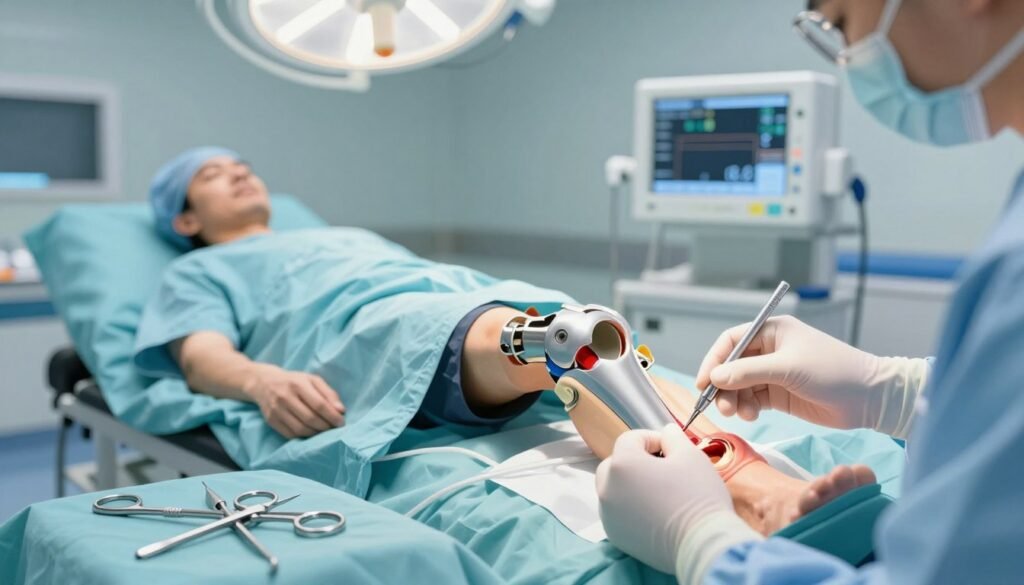
The evolution of joint replacement surgery has been marked by significant advancements. Over the years, this field has witnessed tremendous growth, driven by the increasing demand for effective solutions to joint-related ailments.
Historical Perspective of Arthroplasty
The history of arthroplasty dates back several decades, with early procedures being relatively rudimentary. Early joint replacement surgeries were often associated with high complication rates and limited success. However, as medical technology advanced, so did the techniques and materials used in these procedures.
Current State of Joint Replacement Procedures
Today’s joint replacement procedures are characterized by high-precision techniques, including computer-assisted navigation, robotic-assisted surgery, and patient-specific instrumentation. Some key features of modern joint replacement include:
- Enhanced surgical precision through advanced technologies
- Improved implant materials for durability and compatibility
- Accelerated recovery protocols for quicker patient rehabilitation
- Increasingly outpatient-based interventions with rapid recovery times
The current landscape of joint replacement is driven by global demographic shifts, including aging populations and increasing rates of obesity, which have led to an unprecedented demand for total knee arthroplasty and other joint replacement procedures.
Understanding Modern Joint Replacement Needs

Modern joint replacement needs are being shaped by demographic shifts and the limitations of traditional surgical approaches. The increasing prevalence of joint-related issues among the aging population and the growing demand for more effective and durable solutions are driving innovations in this field.
Demographic Shifts Driving Innovation
The demographic landscape is changing, with an increasing proportion of older adults and a growing prevalence of obesity and other lifestyle-related factors contributing to a higher incidence of joint problems. This shift is driving the need for more effective and longer-lasting joint replacement solutions. For instance, younger, more active patients require implants that can withstand higher levels of activity and last longer.
Challenges in Traditional Joint Replacement Approaches
Traditional joint replacement approaches face several challenges, including imprecise component positioning, extensive tissue disruption, and the risk of infection. These limitations can lead to premature wear, instability, persistent pain, and longer recovery times. The use of standard off-the-shelf implants may not always provide the best fit, particularly for patients with atypical anatomy, resulting in suboptimal functional outcomes. Preventing infections remains a top priority, as even low infection rates can have serious consequences for patients, including longer recovery times and the need for additional surgeries.
The challenges associated with traditional joint replacement approaches are multifaceted. Key issues include:
- Imprecise component positioning leading to premature wear and instability
- Extensive tissue disruption resulting in longer recovery periods and increased post-operative pain
- The risk of infection, which can necessitate revision procedures
- Standard implants not fitting optimally for all patients, particularly those with atypical anatomy
Addressing these challenges is crucial for improving patient outcomes and satisfaction. The development of advanced technologies, such as robotic-assisted surgery and personalized implants, is helping to overcome these limitations and enhance the overall effectiveness of joint replacement procedures.
Robotic-Assisted Joint Replacement Surgery

The use of robotic systems in joint replacement surgery is gaining prominence due to its ability to improve surgical accuracy and patient outcomes. Robotic-assisted joint replacement surgery represents a cutting-edge approach that is transforming orthopedic procedures.
Leading Robotic Platforms
Several robotic platforms have emerged as leaders in the field of joint replacement surgery, including MAKO, ROSA, NAVIO, and VELYS. These systems are designed to enhance the precision of surgical procedures, allowing for more accurate component placement and better restoration of the mechanical axis.
Benefits and Limitations of Robotic Systems
The principal benefits of robotic-assisted total knee arthroplasty (TKA) include improved component placement accuracy, decreased procedural outliers, and precise restoration of the mechanical axis. Research has shown that robotic systems surpass conventional manual procedures by decreasing implant placement inconsistencies.
- Robotic-assisted knee surgery offers significant benefits including improved component placement accuracy, decreased procedural outliers, and precise restoration of the mechanical axis.
- Research by Marchand et al. (2022) demonstrated that robotic arm-assisted total knee arthroplasty produces superior alignment results with fewer complications in both coronal and sagittal planes.
- Enhanced soft tissue management and effective ligament balancing through robotic technology leads to improved patient satisfaction, faster recovery, and potentially increased prosthetic longevity.
- Despite promising outcomes, robotic systems face limitations including substantial startup costs, ongoing maintenance expenses, and single-use equipment requirements that may restrict adoption in resource-limited settings.
Surgeons implementing robotic technology must complete specialized training and navigate a learning curve, which initially results in longer operative times before achieving proficiency. The cost-effectiveness of robotic-assisted surgery remains under evaluation, as studies continue to assess whether improved surgical precision translates to measurably better long-term clinical outcomes for patients.
Computer Navigation Systems in Arthroplasty
The integration of computer navigation in arthroplasty has marked a significant advancement in orthopedic surgery. This technology has enhanced the precision and outcomes of joint replacement procedures.
Pre-operative Planning and Intraoperative Guidance
Computer navigation systems play a crucial role in both pre-operative planning and intraoperative guidance. They enable surgeons to create detailed 3D models of the patient’s anatomy, allowing for more accurate planning of the surgical procedure. During surgery, these systems provide real-time feedback, helping surgeons to accurately position and align implants.
Enhanced precision is achieved through the continuous tracking of surgical instruments and the patient’s anatomy, ensuring that the procedure adheres to the pre-operative plan.
Impact on Surgical Precision and Outcomes
The use of computer navigation in arthroplasty has demonstrated significant improvements in surgical precision. Studies have shown that navigated procedures result in fewer outliers for implant positioning and alignment. This enhanced accuracy correlates with improved functional outcomes for patients, including better range of motion and reduced post-operative pain.
- Computer navigation reduces the variability that can occur with conventional instrumentation, leading to more consistent results across different patient populations.
- Navigated knee replacement procedures have shown lower rates of revision surgery compared to conventional techniques, suggesting improved long-term implant survival.
Revolutionary Implant Materials and Designs
Implant technology has seen remarkable progress, with new materials and designs emerging to address the complex needs of joint replacement patients. Today’s implants are designed to provide long-term stability and improved patient outcomes.
Highly Cross-linked Polyethylene and Advanced Ceramics
The development of highly cross-linked polyethylene and advanced ceramics has significantly improved the durability and performance of joint replacement implants. These materials offer enhanced wear resistance and reduced risk of implant failure, contributing to better patient outcomes. Advanced ceramics, in particular, have shown excellent biocompatibility and mechanical properties, making them suitable for a wide range of orthopedic applications.
Titanium Alloys and Biocompatible Metals
Titanium alloys and other biocompatible metals have become integral to modern joint replacement implants. These materials are valued for their strength, corrosion resistance, and ability to integrate with bone. The use of titanium alloys has been particularly beneficial in cementless implants, where their porous surfaces facilitate bone ingrowth and enhance implant stability.
Cementless Fixation Technologies
Cementless fixation technologies represent a significant advancement in joint replacement, particularly for younger and more active patients. These innovative implants feature porous surfaces made from materials like trabecular metal or titanium foam, allowing for direct bone ingrowth and creating a strong biological bond between the implant and the patient’s natural bone. Recent research has demonstrated promising intermediate and long-term results with cementless knee implants, showing reduced rates of aseptic loosening and improved bone health retention.
The biological fixation achieved with cementless implants preserves bone stock and promotes better bone health around the prosthesis, potentially simplifying future revision procedures if needed. Advanced surface technologies, including hydroxyapatite coatings and optimized pore sizes, have significantly improved the success rates of cementless fixation in joint replacement surgery.
3D Printing Technology in Joint Replacement

3D printing technology is transforming the landscape of joint replacement by enabling the creation of highly customized implants that match the specific anatomy of each patient. This technology has led to major progress in combining precise surface designs with controlled pore structures, enhancing implant compatibility and promoting better bone integration.
Patient-Specific Implant Creation Process
The process begins with preoperative imaging, which allows physicians to design implants specifically for a patient’s anatomy using 3D printing technology. This results in better alignment and more personalized joint movement, ultimately leading to improved outcomes in joint replacement surgeries.
Clinical Outcomes of 3D Printed Implants
Early clinical studies of 3D printed implants have shown promising outcomes, with patients experiencing improved fit, better functional recovery, and higher satisfaction rates compared to standard implants. The controlled pore structures possible with 3D printing enhance osseointegration by mimicking natural trabecular bone architecture, promoting stronger and more complete bone ingrowth.
The benefits of 3D printing in joint replacement include:
- Early clinical studies show promising outcomes, with patients experiencing improved fit and higher satisfaction rates.
- Controlled pore structures enhance osseointegration, promoting stronger bone ingrowth.
- Custom 3D printed implants are particularly beneficial in complex revision cases and for patients with significant bone defects.
- Precise anatomical matching may contribute to more natural kinematics and improved proprioception.
- Initial clinical outcomes suggest that 3D printed implants may offer advantages in stability, range of motion, and potentially extended implant longevity.
Advancements in Joint Replacement Surgical Techniques
Surgical techniques in joint replacement have evolved substantially, enhancing recovery and reducing pain. This evolution is largely attributed to the development of minimally invasive surgery (MIS) approaches and tissue-preserving techniques.
Minimally Invasive Surgery (MIS) Approaches
Minimally invasive surgery has revolutionized joint replacement by reducing the size of the incision, thereby minimizing tissue damage. Studies indicate that MIS procedures result in smaller surgical scarring, reduced blood loss, and decreased postoperative pain intensity, leading to better mobility and shorter hospital stays.
Patients undergoing MIS total knee arthroplasty (TKA) experience faster recovery outcomes, including better knee flexion, improved muscle strength, and enhanced gait function. As noted by a study, “MIS-TKA techniques lead to better early functional recovery for patients.”
Tissue-Preserving Techniques and Their Benefits
Tissue-preserving techniques focus on maintaining the integrity of muscles, tendons, and ligaments surrounding the joint. These advanced approaches minimize disruption to the extensor mechanism during knee surgery, resulting in better quadriceps strength preservation and improved early functional recovery.
- Reduced post-operative pain and decreased narcotic consumption
- Better early knee flexion and improved muscle strength retention
- More natural gait patterns during rehabilitation
- Preservation of proprioceptive tissues around the joint for better balance and coordination
As a result, patients experience higher satisfaction during the initial recovery period. According to research, “tissue-preserving techniques lead to reduced post-operative pain and higher patient satisfaction.”
“The preservation of proprioceptive tissues around the joint may contribute to better balance, coordination, and overall functional outcomes following the procedure.”
Enhanced Recovery After Surgery (ERAS) Protocols
The implementation of Enhanced Recovery After Surgery (ERAS) protocols marks a significant advancement in orthopedic surgical care. These protocols are designed to optimize patient outcomes by minimizing surgical stress and accelerating recovery.
Pre-operative Optimization Strategies
Pre-operative optimization is a critical component of ERAS protocols. This involves a comprehensive assessment of the patient’s health status, including nutritional optimization and management of comorbidities. By ensuring that patients are in the best possible condition before surgery, ERAS protocols help reduce the risk of complications and promote a smoother recovery.
Nutritional counseling and prehabilitation exercises are key elements of pre-operative optimization. These interventions not only enhance the patient’s physical condition but also provide psychological benefits, preparing them for the surgical process.
| Pre-operative Strategy | Description | Benefit |
|---|---|---|
| Nutritional Counseling | Personalized dietary advice to optimize nutritional status | Enhanced wound healing and reduced complications |
| Prehabilitation Exercises | Targeted physical exercises to improve strength and flexibility | Faster recovery and improved functional outcomes |
Post-operative Pain Management and Mobilization
Effective post-operative pain management is crucial for early mobilization and overall recovery. ERAS protocols employ multimodal pain management strategies that minimize opioid use, thereby reducing the risk of opioid-related complications.
- Regional anesthesia techniques, such as peripheral nerve blocks, provide targeted pain relief.
- Early mobilization, often starting on the day of surgery, accelerates functional recovery.
- Structured physical therapy protocols guide progressive mobilization and strengthening exercises.
By integrating these strategies, ERAS protocols have transformed post-operative care, significantly reducing hospital stays while maintaining patient safety and improving satisfaction.
Smart Implant Technology and Sensor Integration
Smart implant technology is transforming the landscape of joint replacement surgery with its advanced sensor integration capabilities. This innovative approach enables real-time monitoring of the implant and patient health, significantly improving outcomes.
Monitoring Joint Function and Patient Activity
Smart implants equipped with sensors can monitor various aspects of joint function and patient activity. These sensors can detect subtle changes in the joint, such as temperature fluctuations, micromotion, and load distribution patterns.
Key benefits include:
- Continuous monitoring of implant stability and function
- Early detection of potential complications, such as infection or loosening
- Data collection for improving implant design and surgical techniques
Early Detection of Complications
If a patient experiences temperature changes, this could signal an infection before symptoms become apparent. Smart implants can detect such changes, enabling early intervention.
- Smart implants equipped with temperature sensors can detect subtle changes that may indicate early infection, allowing for intervention before clinical symptoms develop.
- Continuous monitoring of implant micromotion can alert healthcare providers to potential loosening or instability issues before they progress to symptomatic failure.
- Changes in load distribution patterns detected by sensor-equipped implants may indicate wear, component subsidence, or alignment changes that warrant clinical evaluation.
The integration of smart implant technology with healthcare data analytics can significantly enhance patient care. By analyzing data from smart implants, healthcare providers can identify patterns that predict potential complications before they occur.
Antimicrobial and Surface Coating Innovations
Innovative surface coating and antimicrobial technologies are improving the efficacy and longevity of joint replacement implants. These advancements are crucial in reducing the risk of complications and enhancing patient outcomes.
Infection Prevention Strategies
Antimicrobial coatings play a vital role in preventing infections in joint replacement surgery. By incorporating antimicrobial agents into the implant surface, the risk of bacterial colonization and subsequent infection is significantly reduced.
| Antimicrobial Coating Type | Mechanism of Action | Efficacy |
|---|---|---|
| Silver Coatings | Release of silver ions to inhibit bacterial growth | High efficacy against a broad spectrum of bacteria |
| Antibiotic-loaded Coatings | Localized release of antibiotics to prevent infection | Effective in reducing post-surgical infections |
Hydroxyapatite and Osteointegration Enhancements
Hydroxyapatite coatings represent a biomimetic approach to implant design, utilizing a calcium phosphate mineral that closely resembles the natural composition of bone tissue. According to Dr. Kindsfater, “Because hydroxyapatite looks and behaves like bone, it encourages the body to bond more naturally with the implant.” This enhances the surrounding bone integration with the implant, improving long-term stability.
The benefits of hydroxyapatite coatings include accelerated integration, enhanced stability, and potentially reduced recovery time. Research demonstrates that hydroxyapatite-coated implants achieve faster initial fixation and more complete bone contact compared to uncoated implants.
Gender-Specific and Anatomically Optimized Implants
Advancements in technology have enabled the design of gender-specific and anatomically optimized implants, revolutionizing joint replacement procedures. This development is crucial as it addresses the anatomical variations between different populations, thereby enhancing the fit and function of the implants.
Addressing Anatomical Variations Between Populations
Anatomical differences between genders and among various ethnic groups necessitate customized approaches to joint replacement. Studies have shown that using standard implants can sometimes lead to suboptimal outcomes due to anatomical mismatch. Gender-specific implants are designed to account for these differences, potentially improving the overall outcome of the surgery.
- Customization options in modern joint replacement range from patient-specific instrumentation to fully customized implants designed exclusively for an individual’s unique anatomy.
- Advanced imaging and computer modeling allow for the creation of patient-matched cutting guides that increase the precision of bone preparation and implant positioning.
Customization Options for Improved Fit and Function
The use of patient-matched instrumentation (PMI) combined with customized cutting guides based on MRI or CT data works to increase surgical accuracy and prosthesis placement. Fully customized implants represent the ultimate personalization, with every aspect of the prosthesis designed to match the patient’s specific joint contours and biomechanical requirements.
- Fully customized implants aim to preserve more of the patient’s natural bone while optimizing implant fit, potentially improving functional outcomes and patient satisfaction.
- While offering theoretical advantages in terms of anatomical fit and joint kinematics, customized options continue to be evaluated for their cost-effectiveness and clinical superiority compared to well-designed standard implants.
By adopting these advanced and personalized approaches, surgeons can significantly enhance the success rate of joint replacement surgeries, leading to better patient outcomes and higher satisfaction rates.
Clinical Outcomes and Long-term Durability
Modern joint replacement procedures have shown remarkable success in improving patients’ quality of life and functional ability. The advancements in arthroplasty techniques have significantly enhanced patient outcomes, providing long-term durability and reduced pain.
Survival Rates of Modern Implants
The survival rates of modern implants used in joint replacement surgery have improved substantially. Studies have shown that contemporary arthroplasty procedures result in high implant survival rates, with many implants lasting 15 to 20 years or more.
| Implant Type | Survival Rate at 10 Years | Survival Rate at 15 Years |
|---|---|---|
| Cemented Knee Replacement | 95% | 85% |
| Cementless Knee Replacement | 96% | 90% |
Quality of Life Improvements for Patients
Joint replacement surgery consistently demonstrates remarkable improvements in patient-reported quality of life measures, with significant reductions in pain being the most commonly reported benefit. Patients can return to meaningful activities previously limited by joint pain and dysfunction, such as walking, cycling, and swimming.
Validated outcome measures show significant improvements in both physical function and psychological well-being following successful joint replacement surgery. Patient satisfaction rates typically exceed 85-90%, reflecting the procedure’s effectiveness in addressing pain and functional limitation.
Future Directions in Joint Replacement Technology
The future of joint replacement technology is being shaped by advancements in artificial intelligence and machine learning. These emerging technologies are poised to revolutionize the field of joint replacement surgery by improving patient outcomes and personalizing healthcare.
Innovative Research Approaches
Emerging research is focused on developing new approaches to joint replacement surgery. This includes the use of advanced data analytics to inform research and improve surgical techniques.
- Advanced data analytics for informed research
- Experimental approaches to implant design
Artificial Intelligence and Machine Learning Applications
Artificial intelligence and machine learning are being applied in various ways to improve joint replacement surgery. These include:
- Predictive modeling for optimal implant positioning
- Personalized risk mitigation strategies for patients
- Optimized rehabilitation protocols based on individual patient characteristics
- Real-time feedback on component positioning during surgery
These advancements are set to significantly impact the future of joint replacement technologies and improve healthcare for patients undergoing joint replacement surgery.
Conclusion: The Transformative Impact of Joint Replacement Advancements
The landscape of joint replacement surgery is undergoing a profound shift, driven by cutting-edge technologies and innovative approaches. Over recent decades, the field has witnessed remarkable advancements, transforming what was once a limited and highly invasive procedure into a sophisticated, personalized intervention.
Technological innovations, including robotic assistance, computer navigation, and 3D printing, have dramatically improved surgical precision and implant customization. These developments have addressed previous limitations in component positioning and fit, leading to better outcomes for patients. Moreover, material science breakthroughs have extended implant longevity while reducing wear-related complications, making arthroplasty a viable option for younger and more active patients.
The integration of digital technologies, from preoperative planning to smart implants and AI-assisted rehabilitation, is creating a more connected and data-driven approach to joint replacement care. These collective advancements have significantly improved the quality of life for millions of patients worldwide, restoring mobility and eliminating pain that previously limited their participation in daily activities. As research continues and technologies mature, joint replacement surgery will likely become even more personalized, less invasive, and more durable, further enhancing its role as one of healthcare’s most successful interventions.
About Dr Aniket Patil:
Dr. Aniket Patil is a fellowship-trained orthopedic and joint replacement surgeon based in Pune, leading the way in modern advancements in joint replacement surgery. At his practice, patients benefit from cutting-edge techniques such as robotic-assisted joint replacement, improved implant technologies, and personalized pre- and postoperative care tailored to individual needs. Serving patients from Pimpri Chinchwad (PCMC), Wakad, Kharadi, Viman Nagar and the greater Pune region, Dr. Patil’s expertise focuses on delivering durable, pain-relieving outcomes for hip, knee, and other joint conditions. With a patient-centric approach supported by state-of-the-art diagnostic and surgical tools, the clinic helps restore mobility and quality of life for individuals of all ages seeking advanced joint replacement solutions.
 Previous Post